



 OCTOBER 30, 2018 , LAS VEGAS - The Mopar brand is stampeding into the 2018 Specialty Equipment Market Association (SEMA) Show with a brand-new HEMI®-engine-powered beast: the “Hellephant” 426 Supercharged Mopar Crate HEMI engine, which turns the crank at a mammoth 1,000 horsepower and 950 lb.-ft. of torque.
The “Hellephant” 426 Supercharged Mopar Crate HEMI engine is a Mopar-first for a 1,000-horsepower crate engine kit offered by an Original Equipment Manufacturer (OEM).
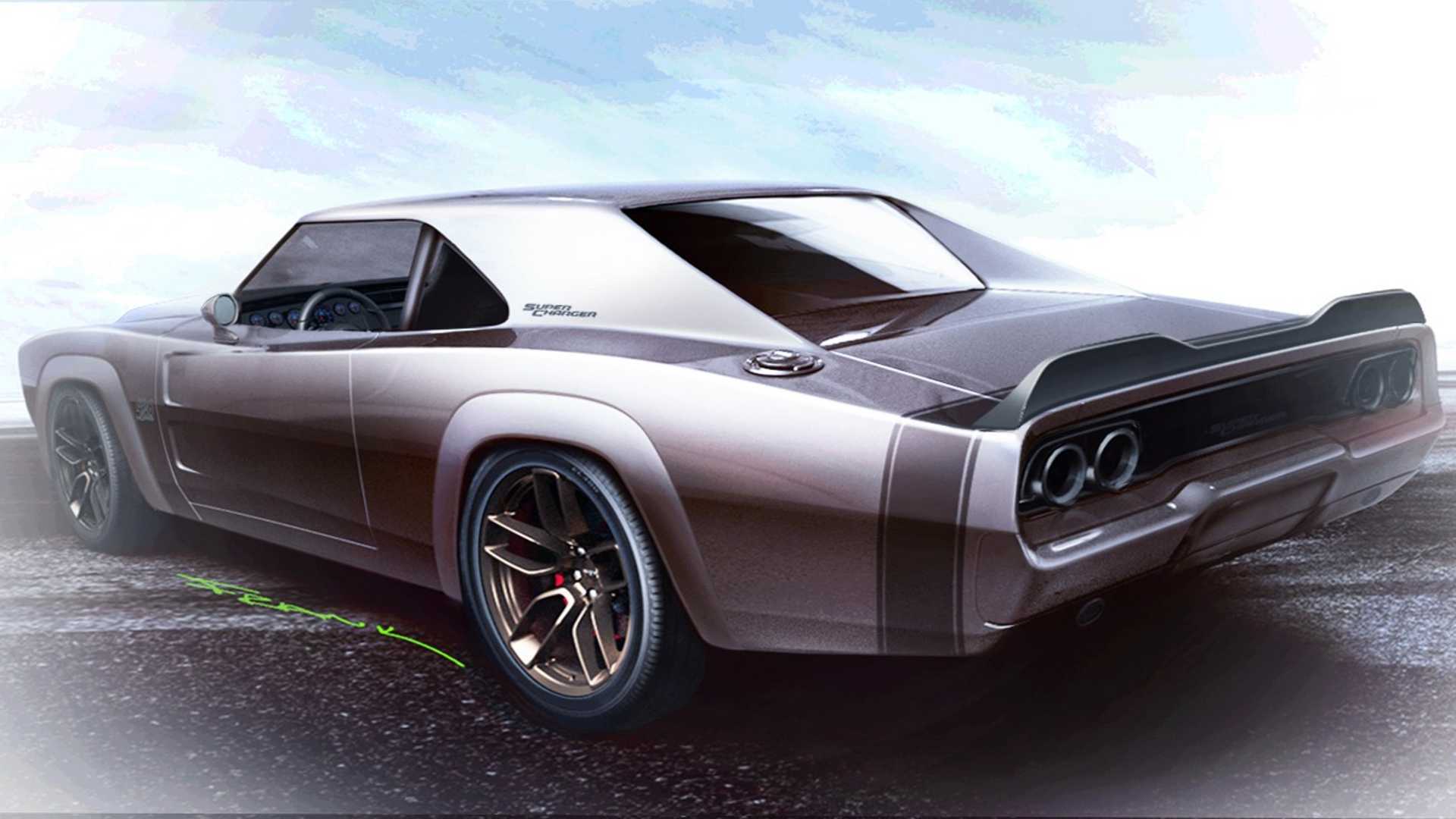
The press briefing today in the Mopar exhibit at SEMA also included the unveiling of the 1968 Dodge “Super Charger” Concept, the perfect package for highlighting the “Hellephant” 426 Supercharged Crate HEMI engine assembly and kit.
“Our enthusiasts crave power and performance and our new ‘Hellephant’ Mopar Crate HEMI engine and kit deliver huge horsepower and torque in a plug-and-play package that is unique in the industry,” said Steve Beahm, Head of Parts & Service (Mopar) and Passenger Car Brands, FCA - North America. “The 1968 Dodge Charger is one of the hottest classic cars, which is why we decided to use it as a starting point for the ‘Super Charger’ Concept. It’s an amazing vehicle and a great showcase for our ‘Hellephant’ engine.”
The “Hellephant” engine hits the magical 1,000 horsepower mark via bulked-up displacement, with 4.0 inches of stroke and bore specs at 4.125 inches. An improved supercharger with a high-efficiency rotor is mounted on the all-aluminum block, which provides huge weight savings to keep the “Hellephant” light. The all-aluminum block, used in Mopar Dodge Challenger Drag Pak race vehicles that dominated the 2018 NHRA Factory Stock Showdown class, was configured for the street in close collaboration with Mopar and engineers from the motorsports world.
The engine and kit’s distinctive “Hellephant” logo provides a nod to the Mopar brand’s past and present. The logo and name call out the legendary 426 HEMI engine, first introduced in 1964 and nicknamed the “elephant” engine for its power and size, as well as the 707-horsepower Mopar “Hellcrate” Engine Kit, revealed last year at the 2017 SEMA Show.
The complete engine assembly includes a water pump, flywheel, front sump oil pan, supercharger with throttle body, fuel injectors and coil packs. The first-ever 1,000 horsepower crate engine assembly offered by an OEM can be paired with the Mopar “Hellephant” 426 Supercharged Mopar Crate HEMI Engine Kit for relatively simple plug-and-play by experienced installers. The engine assembly and kit are designed for installation on pre-1976 street and off-road vehicles.
Additional features of the “Hellephant” 426 Supercharged Mopar Crate HEMI engine include valve covers imported from the Dodge Challenger SRT Hellcat Redeye and valve train, valves, locks and retainers pulled from the Dodge Challenger SRT Demon. The engine build includes a special high-lift cam, as well as custom-forged pistons.
Dropping in the “Hellephant” is almost turnkey with the “Hellephant” 426 Supercharged Mopar Crate HEMI Engine Kit. The kit includes a powertrain control module (PCM), power distribution center, engine wiring harness, chassis harness, accelerator pedal, ground jumper, oxygen sensors, charge air temperature sensors, fuel pump control module and cam bus interface device. The PCM is unlocked and tuned to pump out 1,000 horsepower and 950 lb.-ft. torque.
As with the “Hellcrate” engine, Mopar will also offer an essential Front End Accessory Drive (FEAD) Kit, which includes an alternator, power-steering pump, belts, pulleys and more, and is among additional engine accessory hardware components available to assist in installing the “Hellephant.”
The kit ships in unique packaging, featuring the “Hellephant” logo and includes in-depth information sheets with helpful installation tips and requirements.
The “Hellephant” 426 Supercharged Mopar Crate HEMI engine assembly and kit will be available in the first quarter of 2019. For more information, visit www.cratehemi.com, and follow Mopar on Twitter (@OfficialMopar) using the new #Hellephant hashtag.
1968 Dodge “Super Charger” Concept
The 1968 Dodge Charger, one of the most iconic vehicles ever built by FCA US, is reimagined with modern elements from the current Dodge Charger SRT and the Dodge Challenger SRT lineup to create a unique package for showcasing the Mopar brand’s new “Hellephant” 426 Supercharged Mopar Crate HEMI engine and kit.
The 1968 Dodge “Super Charger” Concept is adapted to accommodate the “Hellephant” engine, enabling the classic ride to slam 1,000 horsepower to the pavement through a stock T-6060 manual six-speed Dodge Challenger SRT Hellcat transmission.
The custom “De Grigio” Grey Metallic classic 1968 Dodge Charger, which is marking its 50th anniversary in 2018, feeds the “Hellephant” fresh air through a supersized hood scoop modeled on that of the Dodge Challenger SRT Demon. The hood features fiberglass construction on the outside with inner-steel construction inside carried over from the original vehicle. The 1968 Charger’s pop-up headlamp design is tweaked to plant Dodge Challenger SRT Hellcat headlamps permanently behind the grille. The original’s door handles and drip rails are shaved away, creating a clean, streamlined appearance. Front door vent windows are removed and replaced with a one-piece side glass. The 1971 Duster mirrors add a more modern appearance.
The 1968 Dodge “Super Charger” Concept assumes a “wide body” stance thanks to front and rear fiberglass wheel flares painted “De Grigio” Grey Metallic body color. The front wheels push forward two inches to accommodate the flares and shorten the Charger’s overhang, extending the classic’s wheelbase from 117 inches to 119 inches. Front wheels are stock 20 x 11-inch Devil’s rims pulled from the Challenger SRT Hellcat, while the rears are upsized 21 x 12-inch custom-milled aluminum Devil’s wheels. The body drops 2.5 inches in the rear and 3.5 inches in the front to aggressively hug the pavement. Six-piston Brembos deliver a decisive stopping-power advantage over the 1968 brakes.
Custom fiberglass front and rear bumpers are flushed up and shortened cross-car to provide an integrated design. The custom fiberglass front chin splitter takes influence from the Demon, while the custom rear spoiler is inspired by the modern Charger R/T. The trunk key cylinder lock is shaved and the Satin Black fuel door embellished with a custom-milled aluminum “Hellephant” medallion, one of many unique design touches incorporated throughout the “Super Charger” Concept. Vehicle graphics and badging are Satin Black vinyl decals, including the “Hellephant” logo on the front fenders, “Super Charger” badging above the doors and classic tail stripes at the rear.
The Product Design Office (PDO) team let their imaginations run wild at the tail of the ’68 Charger. The lower exhaust tips are eliminated and replaced with Alfa Romeo Stelvio 5-inch dual-walled exhaust tips re-engineered to run through the taillamp housing. The brake lights have been uniquely reconfigured with LED lights that glow around the exhaust tips.
Inside, door panels and interior trim are Satin Black with the unique “Hellephant” milled medallion applied on the upper door panels. The Dodge Viper steering wheel also carries the “Hellephant” medallion at its center. The instrument panel insert is “De Grigio” Grey Metallic body color and the dash is customized with a full array of Mopar gauges.
The body-color center console holds a manual shifter from the Dodge Challenger SRT Hellcat, as well as the ignition button and toggle switches for the headlamps, wipers, fog lights and hazard lights. The stock front seats have been replaced with Dodge Viper seats re-wrapped in Alcantara leather accented with red stitching and are fitted with four-point Sabelt black racing harnesses. The Dodge Challenger SRT Demon seat delete option opens up the rear and also sheds weight while making space for a custom 2-inch roll cage designed to follow the profile and harmonize with the shape of the day light opening (DLO). A Challenger SRT Demon net allows for storage of racing equipment such as helmets and gloves. A black Challenger SRT Hellcat carpet covers the rear of the interior, while the front features custom floor mats modified from the current Charger SRT and Mopar pedal kits for the Challenger.
Comments
Post a Comment