




 Stronger, faster and more sustainable on the racetrack
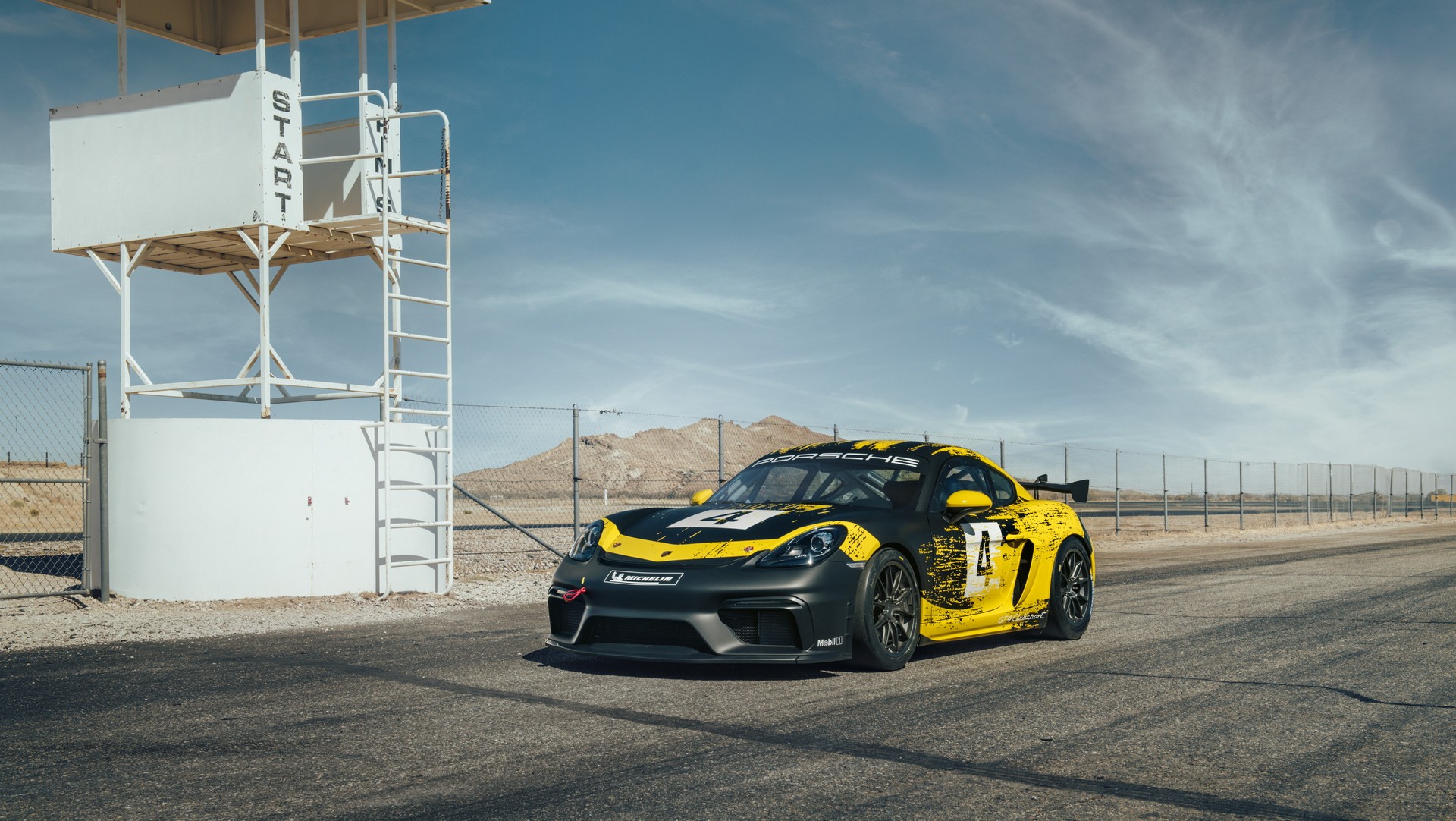
New Porsche 718 Cayman GT4 Clubsport featuring natural-fibre body parts
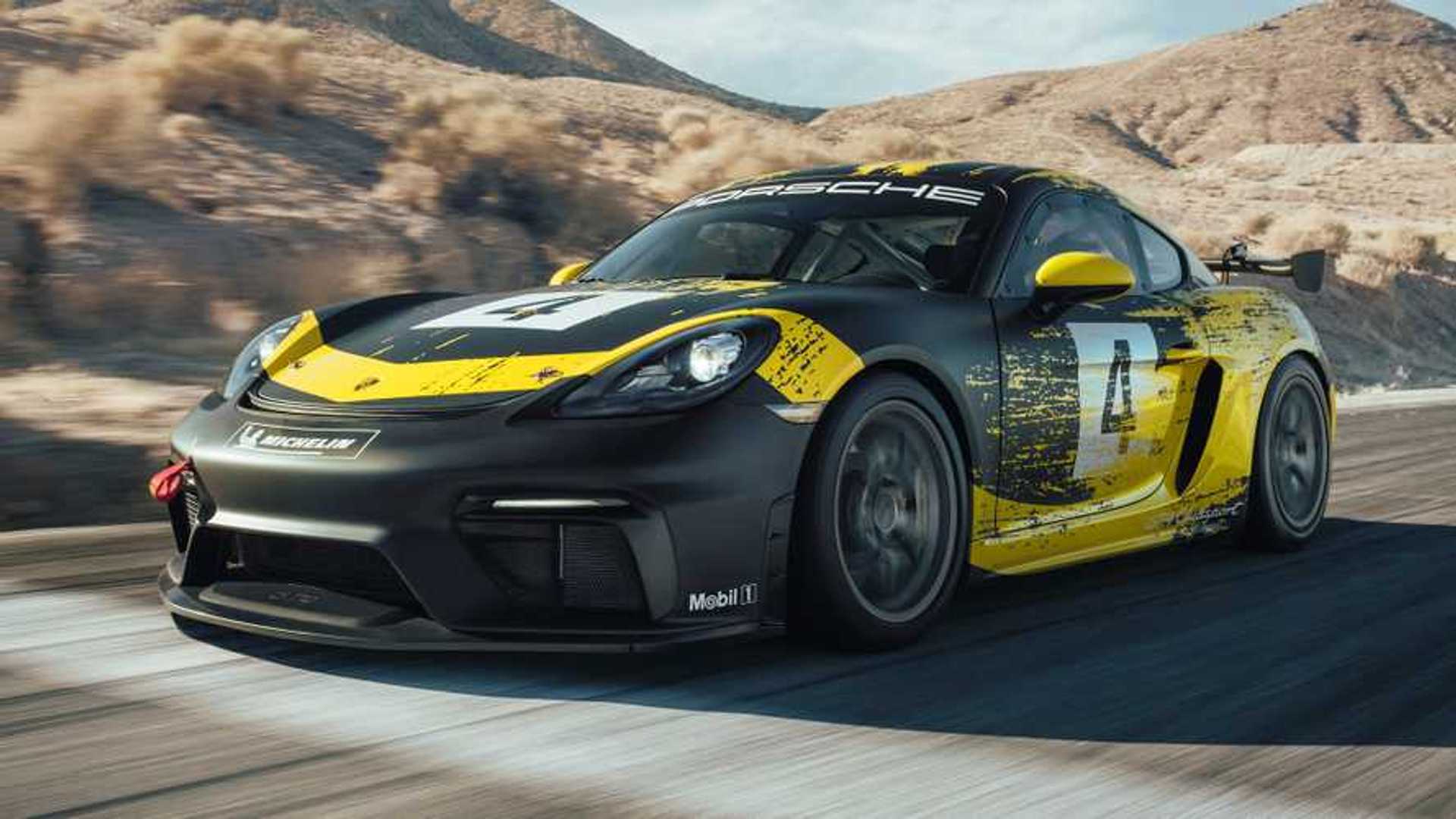
Stuttgart. Three years after the premiere of the first Cayman GT4 Clubsport, Porsche now unveils its successor: The new 718 Cayman GT4 Clubsport represents a consequent further development of the successful model from Weissach. For the first time, the near-standard mid-engine racer comes in two versions ex-works: the “Trackday” model for ambitious amateur racing drivers and the “Competition” variant for national and international motor racing.
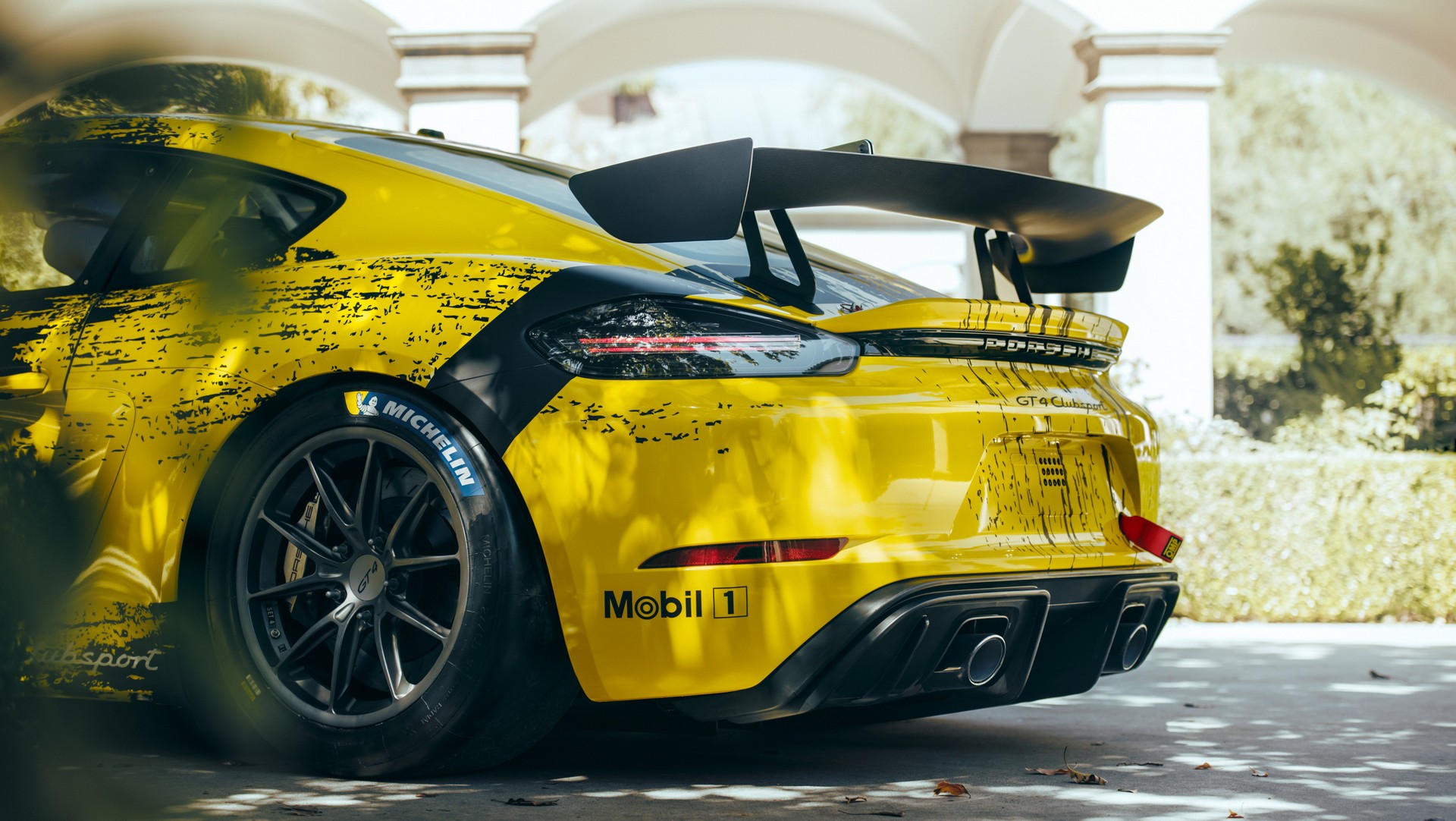
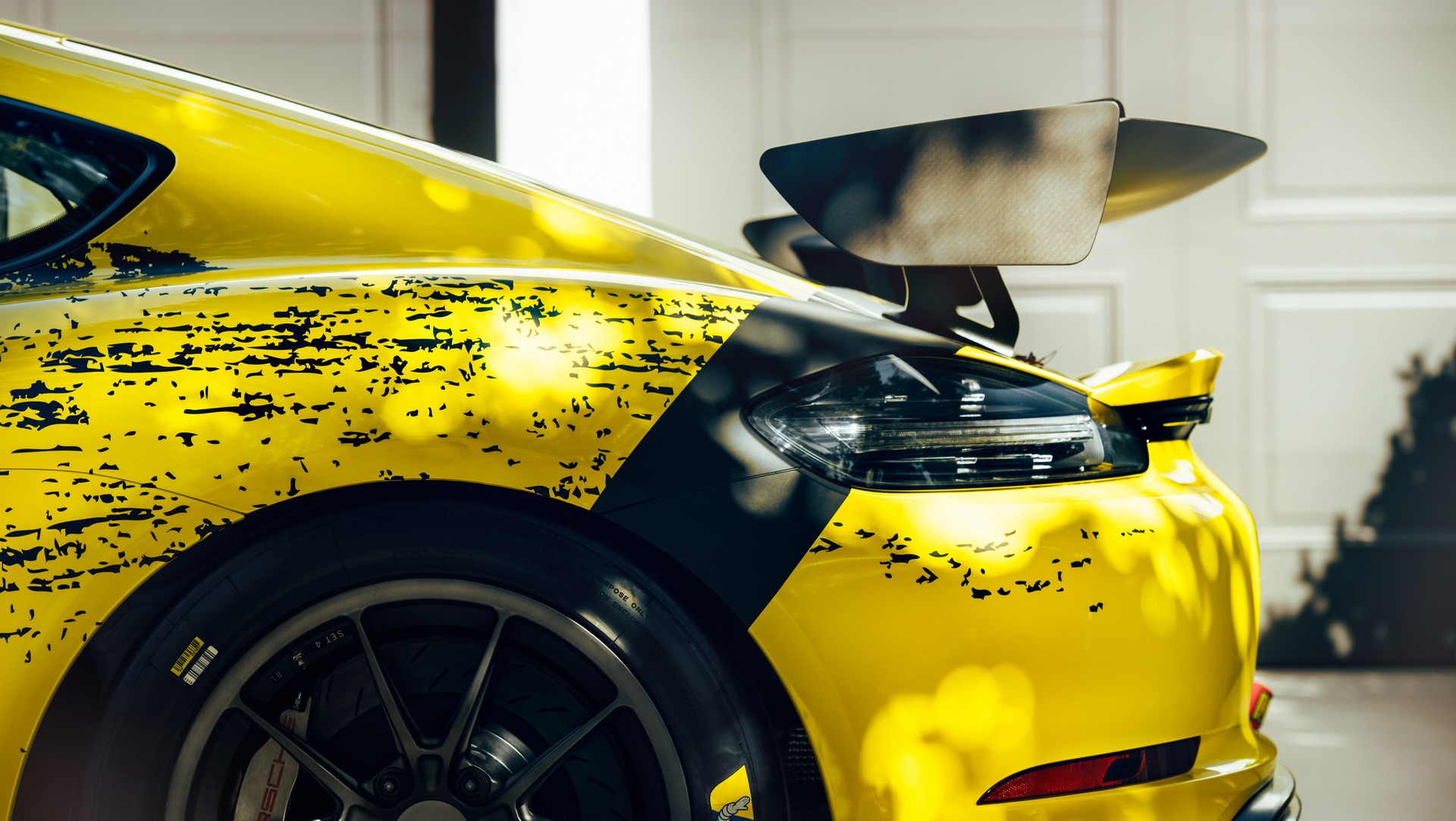
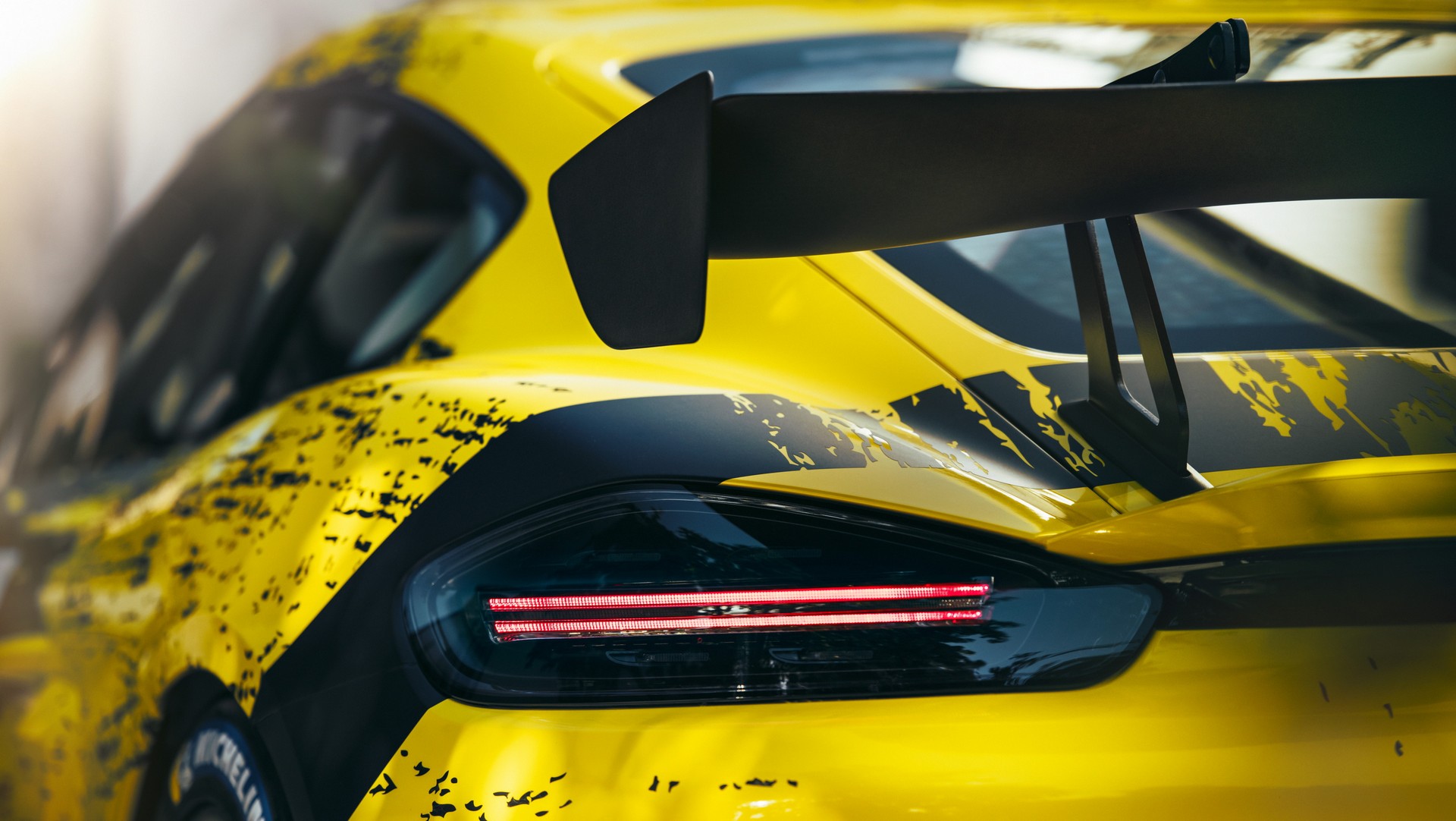
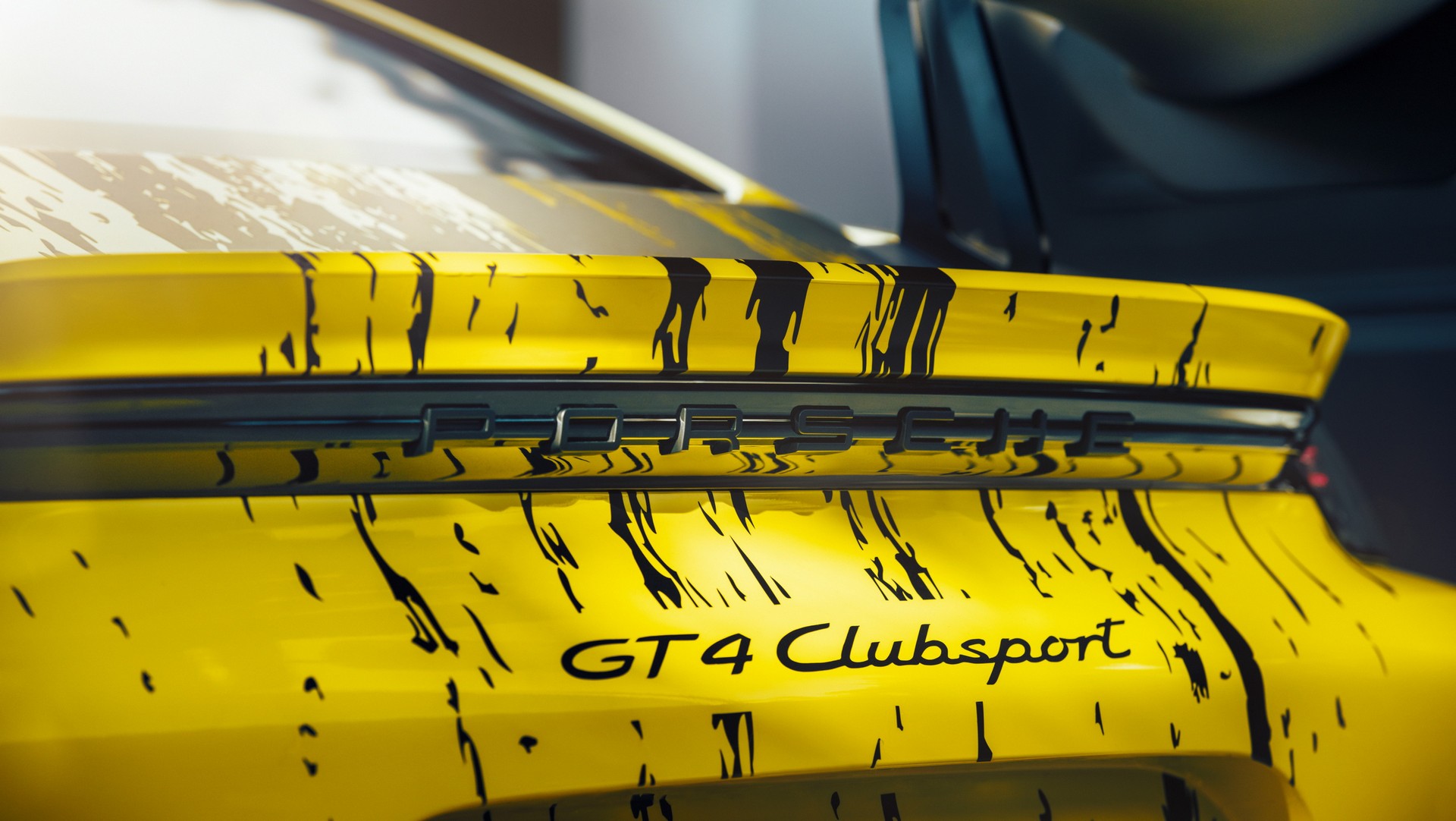
In developing the new 718 Cayman GT4 Clubsport, the focus was put not only on further improved driveability and faster lap times but also on the sustainable use of raw materials. The 718 Cayman GT4 Clubsport is the first ever production race car to feature body parts made of natural-fibre composite material. The driver and co-driver doors and the rear wing are made of an organic fibre mix, which are sourced primarily from agricultural by-products such as flax or hemp fibres and feature similar properties to carbon fibre in terms of weight and stiffness.
Powering the 718 GT4 Clubsport is a 3.8-litre flat-six engine producing 313 kW (425 hp). Compared to its predecessor, this represents a 40-hp increase in performance. The power is transferred to the rear wheels via a Porsche dual-clutch gearbox with six gears and mechanical rear axle differential lock. The lightweight spring-strut front suspension is taken from its big 911 GT3 Cup brother. The impressive racing brake system features steel brake discs all round measuring 380 millimetres in diameter. Tipping the scales at 1,320 kilograms, the 718 Cayman GT4 Clubsport, delivered ex-works with a welded-in safety cage, a racing bucket seat as well as a six-point harness, is a real lightweight.
The basis “Trackday” version is aimed at amateur drivers who want to take part in private track and clubsport events without major effort and outlay. The vehicle features a fixed shock absorber setup. The ABS, ESC and traction control assistance systems ensure forgiving handling at the limit and can be deactivated. Also delivered ex-works is the air-conditioning system, a rescue hatch in the roof, a handheld fire-extinguisher and an 80-litre FT3 safety fuel cell. The non-road-homologated vehicle can be serviced at all Porsche Centres. The 718 Cayman GT4 Clubsport “Trackday” costs 134,000 Euro plus country-specific VAT.
The “Competition” model features a raft of details relevant for racing. The shock absorbers can be adjusted in three stages. The safety fuel tank with a capacity of 115 litres is suitable for long-distance events. Thanks to a brake balance system, the balance bias can be infinitely adjusted between the front and rear axle. An integrated air jack system guarantees fast pit stops. The quick-release racing steering wheel adopted from the 911 GT3 R ensures a range of adjustment options for the individual needs of the drivers. An automatic fire extinguishing system adds another safety feature for the racetrack. The 718 Cayman GT4 Clubsport “Competition” is priced at 157,000 Euro plus country-specific VAT.
“The new Porsche 718 Cayman GT4 Clubsport possesses significantly more racing genes than its successful predecessor,” says Porsche’s head of motorsport Fritz Enzinger. “The power of the engine has increased considerably. At the same time, we were able to increase the downforce and the cockpit is now even better suited to drivers’ needs. I’m confident that we can build on the excellent sales figures of the predecessor, of which we have delivered 421 cars.”
Both versions can be ordered immediately and will be delivered to teams and drivers around the world from February.
Technical description Porsche 718 Cayman GT4 Clubsport (Type 982)
Concept
• Single-seater, near-standard production-based race car, not road homologated
Engine
• Aluminium six-cylinder mid-positioned boxer engine with rigid mounting
• 3,800 cc; stroke 77.5 mm, bore 102 mm
• Max. power: 313 kW (425 hp) at 7,500 rpm
• Max. rpm: 7,800 rpm
• Max. torque: 425 Nm at 6,600 rpm
• Compression ratio: 12.5:1
• Racing optimised water cooling with thermal management for engine and gearbox
• Four-valve technology with adjustable camshaft phasing and variable valve timing VarioCam Plus
• Fuel quality: Super Plus unleaded, minimum 98 octane
• Racing optimised electronic engine management (Continental SDI 9)
• Integrated dry sump lubrication
• 100-cell metal catalytic converter complying with DMSB specifications
Transmission
• Rear wheel drive
• 6-speed PDK gearbox with rigid suspension and electronic control unit optimised for racing
• Reinforced dual mass flywheel
• Internal pressure oil lubrication with active oil cooling
• Differential lock optimised for racing
Bodywork
• Lightweight body in aluminium-steel composite construction
• Welded-in roll cage, certified according to FIA Art. 277
• Front bonnet with quick release fasteners
• Rear hood with quick release fasteners
• Fixed rear wing with “swan neck” mount made of natural-fibre composite materials, including the sideblades, black aluminium wing supports with integrated carbon fibre Gurney flap
• Driver and co-driver doors of natural-fibre composite materials
• Roof including escape hatch, certified according to FIA Art. 275a
• Recaro race bucket seat with longitudinal adjustment and padding system, adjustable to the individual needs of the drivers (in accordance with FIA Standard 8862/2009 – the latest FIA requirements)
• Three-piston air jack system (“Competition”)
• Pre-installed mounting points for three-piston air jack system (“Trackday”)
• Provision for safety net
• FIA-certified towing loops, front and rear
• Motorsport centre console with enhanced functionality and adapted usability
• Six-point safety harness
• 115-litre FT3 safety fuel cell with “Fuel Cut Off” safety valve complying with FIA regulations (“Competition”)
• 80-litre FT3 safety fuel cell with “Fuel Cut Off” safety valve complying with FIA regulations (“Trackday”)
Suspension
Front axle:
• MacPherson suspension strut, adjustable in height, camber and track
• Forged suspension links: optimised stiffness, double shear mounting, high-performance spherical bearings
• 5-bolt wheel hubs
• Racing 3-way shock absorbers with rebound and 2-stage compression adjustment, high and low speed (“Competition”)
• Fixed shock absorbers (“Trackday”)
• Electromechanical power steering with variable steering ratio
• Anti-roll bar, 3-hole design
Rear axle:
• MacPherson suspension strut, adjustable in height, camber and track
• Forged suspension links: optimised stiffness, double shear mounting, high-performance spherical bearings
• 5-bolt wheel hubs
• Racing 3-way shock absorbers with rebound and 2-stage compression adjustment, high and low speed (“Competition”)
• Fixed shock absorbers (“Trackday”)
• Adjustable blade-type anti-roll bar
Brake system
Front axle:
• Aluminium, mono-bloc six-piston racing callipers with “Anti Knock Back” piston springs
• Steel brake discs, multi-piece, ventilated and grooved, 380 mm diameter
• Racing brake pads
• Brake balance adjustment via a balance bar system (“Competition”)
• Brake booster (“Trackday”)
Rear axle:
• Aluminium, mono-bloc four-piston racing callipers with “Anti Knock Back” piston springs
• Steel brake discs, multi-piece, ventilated and grooved, 380 mm diameter
• Racing brake pads
• Brake balance adjustment via a balance bar system (“Competition”)
• Brake booster (“Trackday”)
Electrics
• COSWORTH instrument cluster ICD with integrated data logger
• Upgraded fault diagnosis with PIWIS motorsport tester
• Porsche Track Precision Race App
• Integrated lap trigger via GPS signal
• Electronic throttle system
• Lightweight lithium-ion (LiFePo) battery, 60 Ah, leak-proof, mounted in passenger footwell (“Competition”)
• Battery 12 V, 70 Ah (AGM), leak-proof, mounted in passenger footwell (“Trackday”)
• Emergency cut-off switch in cockpit and outside left of the windscreen
• Driving stability system PSM (Porsche Stability Management) with ABS, traction Control (TC) and Electronic Stability Control (ESC), able to be completely deactivated
• Tyre pressure monitoring system (TPMS)
• Central fire extinguishing system in accordance with FIA regulations (“Competition”)
• Handheld fire extinguisher (“Trackday”)
• Air conditioning
• Electric wing mirror adjustment
• Multifunctional CFRP motorsport steering wheel with pit speed limiter and quick release coupling (“Competition”)
• Multifunctional motorsport steering wheel with pit speed limiter (“Trackday”)
• Centre console with map switch to adjust the ABS, ESC, TC and switch between preset tyre circumferences
Weight/dimensions
• Total weight: 1,320 kg
• Total length: 4,456 mm
• Total width: 1,778 mm
• Total height: 1,238 mm
• Wheelbase: 2,456 mm
Rims/Tyres
Front axle:
• One-piece light-alloy forged wheels in new weight-optimised rim design, 9J x 18 offset 28 with 5-bolt mounting
• Delivered with Michelin transportation tyres, dimension: 25/64-18
• Michelin slick/wet tyres, dimension: 25/64-18
Rear axle:
• One-piece light-alloy forged wheel in new weight-optimised rim design, 10.5J x 18.5 offset 53 with 5-bolt mounting
• Delivered with Michelin transportation tyres, dimension: 27/68-18
• Michelin slick/wet tyres, dimension: 27/68-18
Colours
• Water-based paint
• Exterior: white C9A
• Interior: white filler-coat, without lacquer
Delivery
Starting in February 2019
Comments
Post a Comment