 20 MAY 2019
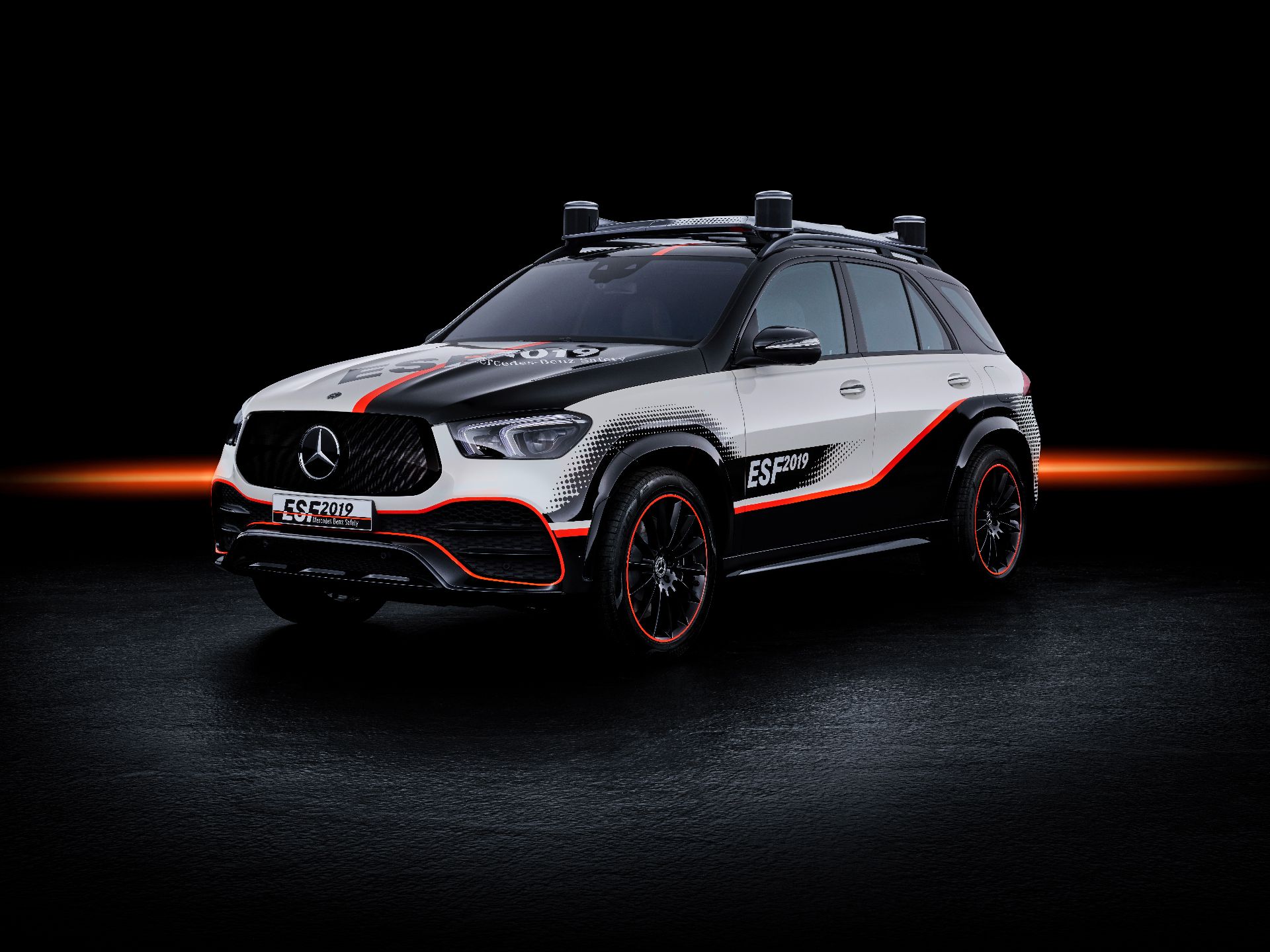
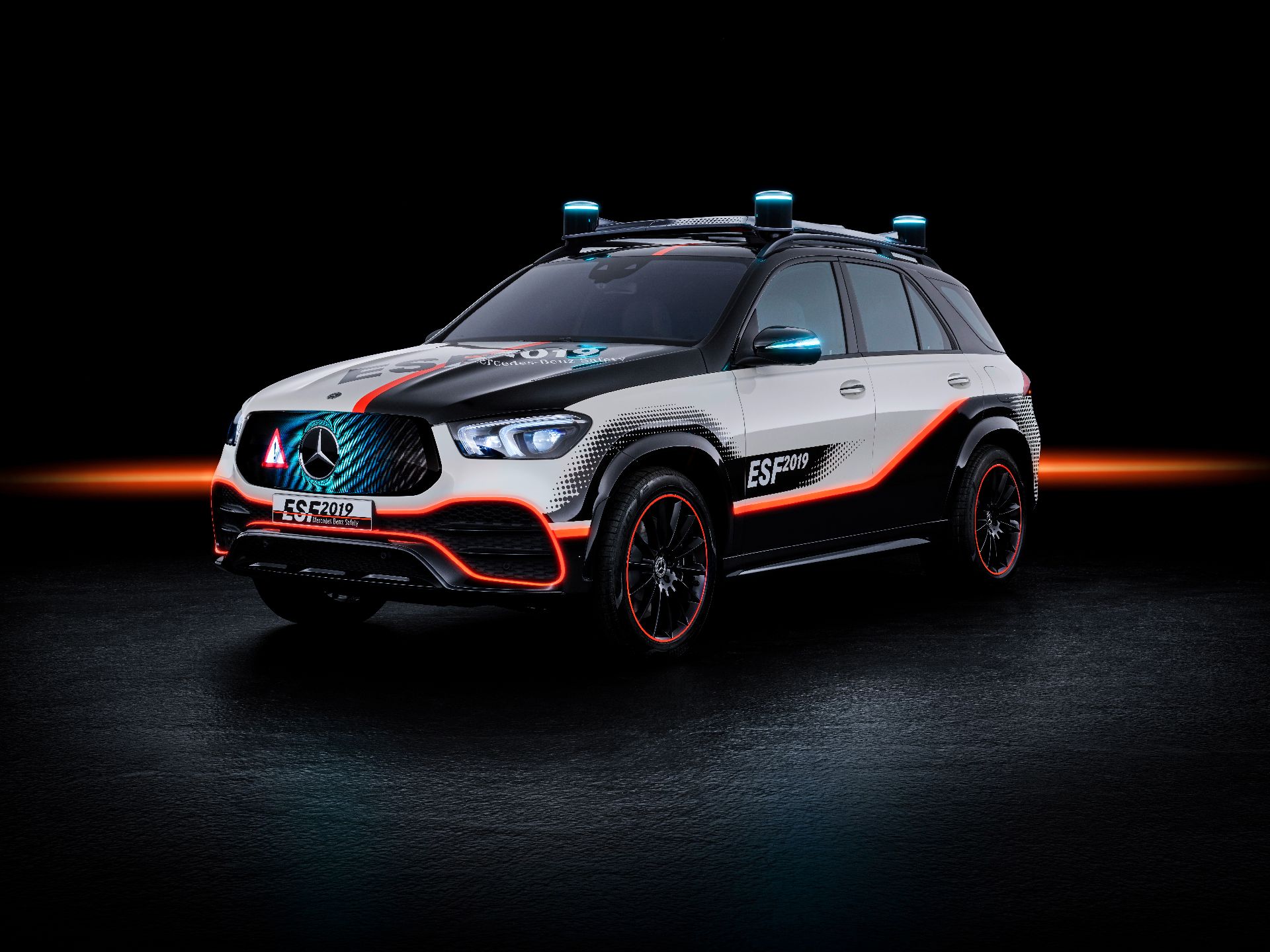
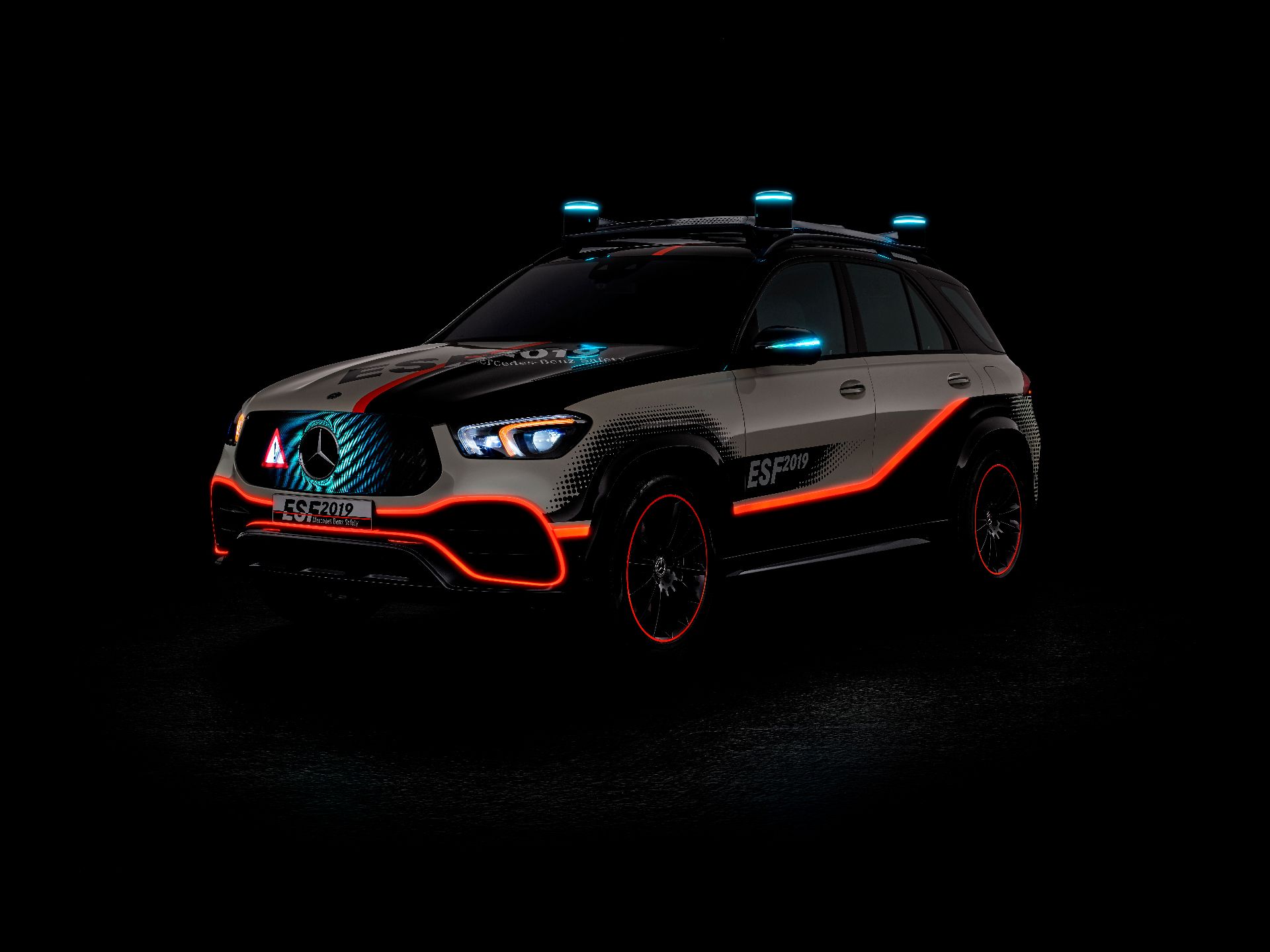
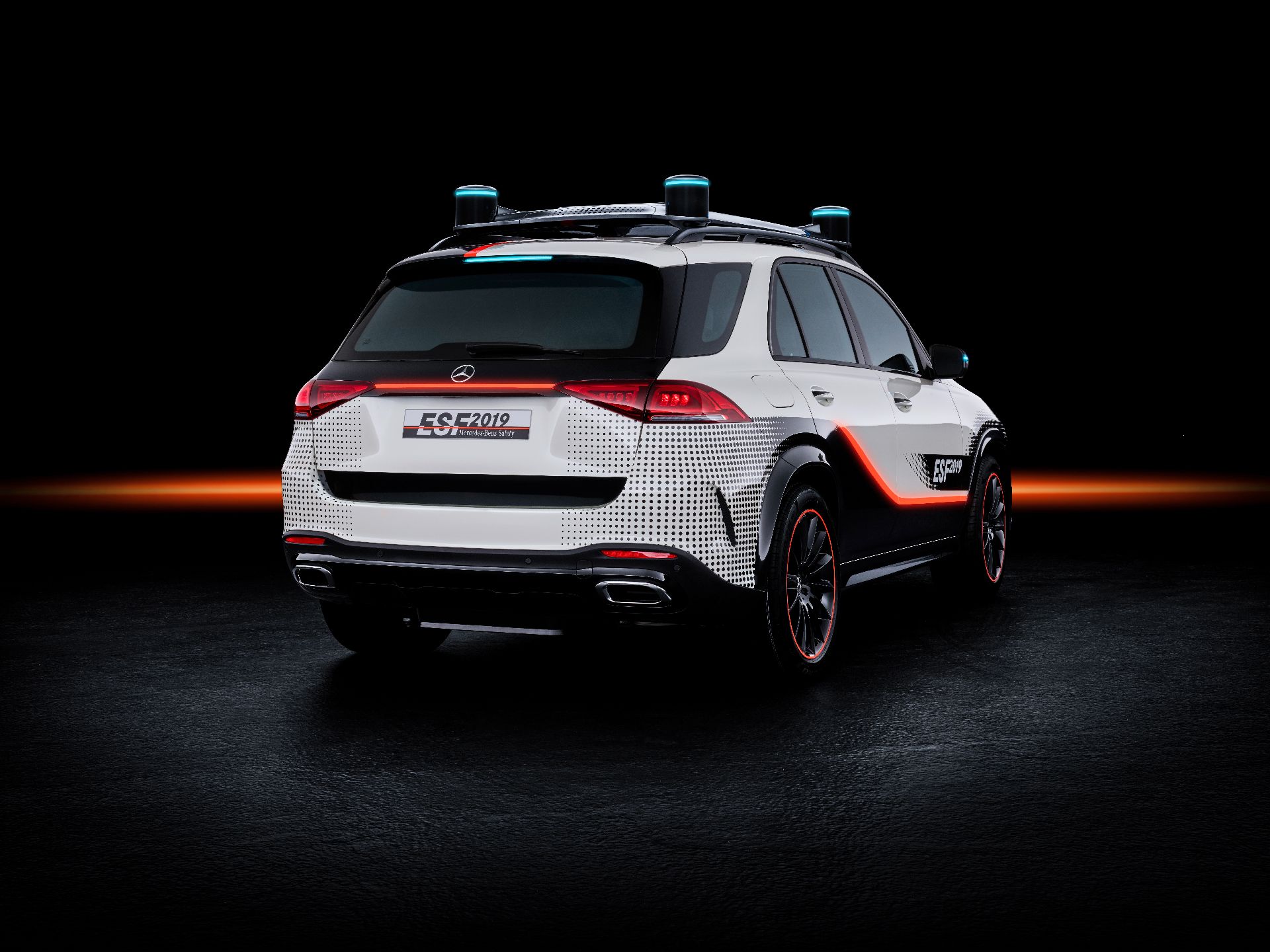
Electric drive systems and automated driving are key technologies for the mobility of the future. This leads to changes in the requirements for in-car safety technology: firstly, much more flexible seating positions in the interior of such vehicles require a different form of occupant protection. And secondly, empathy and trust are central factors for the acceptance of self-driving vehicles. Other road users must be able to recognise intuitively what an automated vehicle intends to do, as in many situations there will be no driver to communicate this. With the new Experimental Safety Vehicle ESF 2019, Mercedes-Benz is giving an insight into the ideas that the company's safety experts are researching and working on. Among the one dozen or so innovations, some are near-series developments and some look well into the future.
The ESF 2019 is based on the new Mercedes-Benz GLE, is capable of automated driving in many situations and has a plug-in hybrid drive system. In June 2019 the ESF 2019 will make its grand appearance before experts at the ESV convention in Eindhoven (Netherlands). It will then make its public appearance at the International Motor Show (IAA) in Frankfurt in September 2019. In some respects the ESF 2019 is a preview of what is to come, in others a vision and in yet others a contribution to the general discussion, but it is also a tool for improved traffic safety in the great tradition of Mercedes-Benz.
"Safety is part of the brand DNA of Mercedes-Benz. We have repeatedly demonstrated that we are not short of ideas in this field since the 1970s, with our Experimental Safety Vehicles. The new ESF 2019 reflects the mobility of the future, and presents a wide variety of innovations which we are currently researching and developing. And I can already say this much: some of the functions are very close to series production," says Ola Källenius, Member of the Daimler AG Executive Board responsible for Mercedes-Benz Cars Development.
"Safety continues to be our core brand value," says Prof. Dr.-Ing. Rodolfo Schöneburg, Head of the Vehicle Safety, Durability and Corrosion Protection Centre at Mercedes-Benz Cars. "The great advantage of automating driving functions is that in the future, fewer accidents will be caused by driver error. However, automated and driverless vehicles also come up against physical limits, and there will undoubtedly be mixed traffic consisting of automated and non-automated vehicles for many years."
More than one dozen innovations: more protection for passengers and partners
An overview of the key topics covered by the ESF 2019:
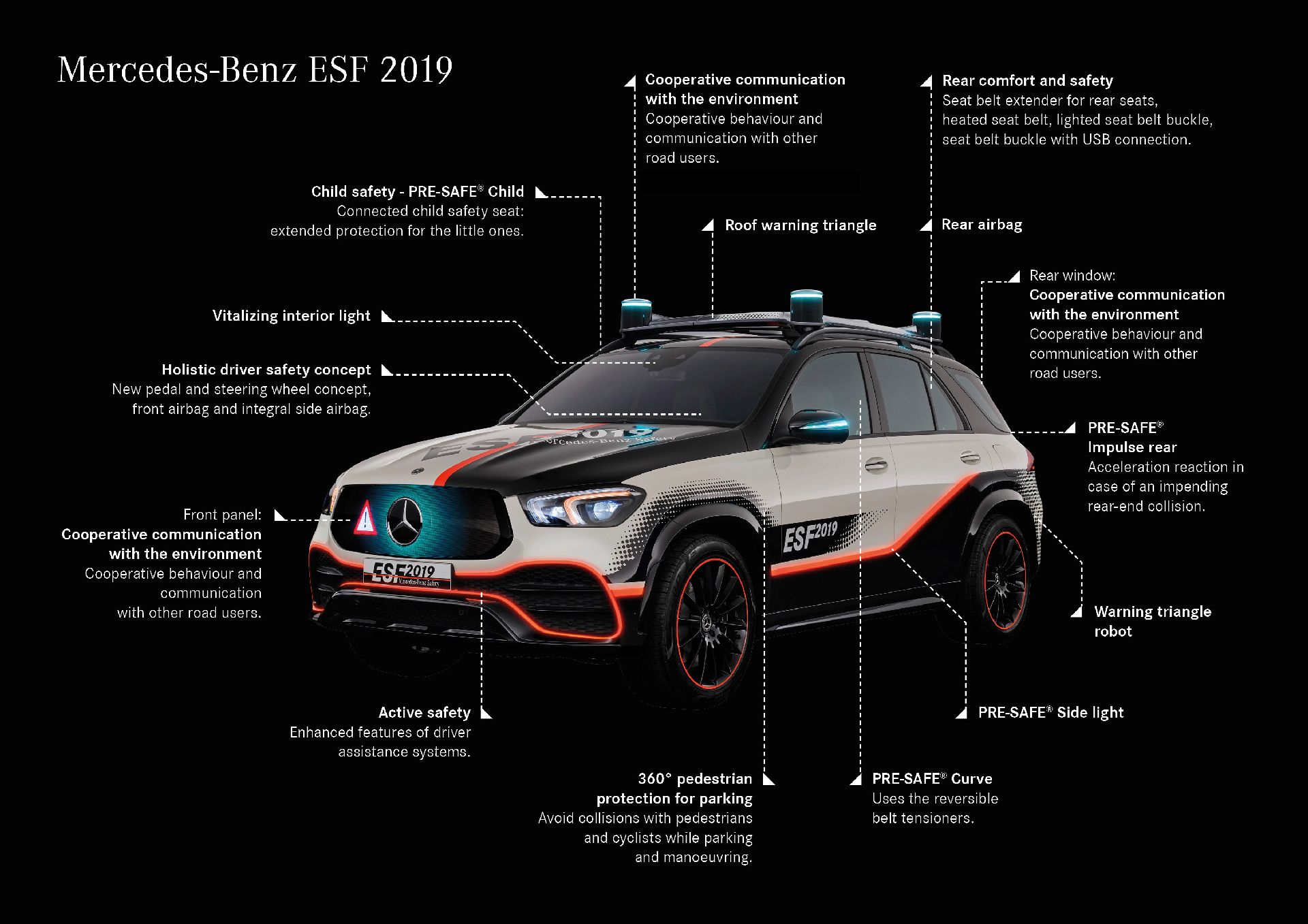
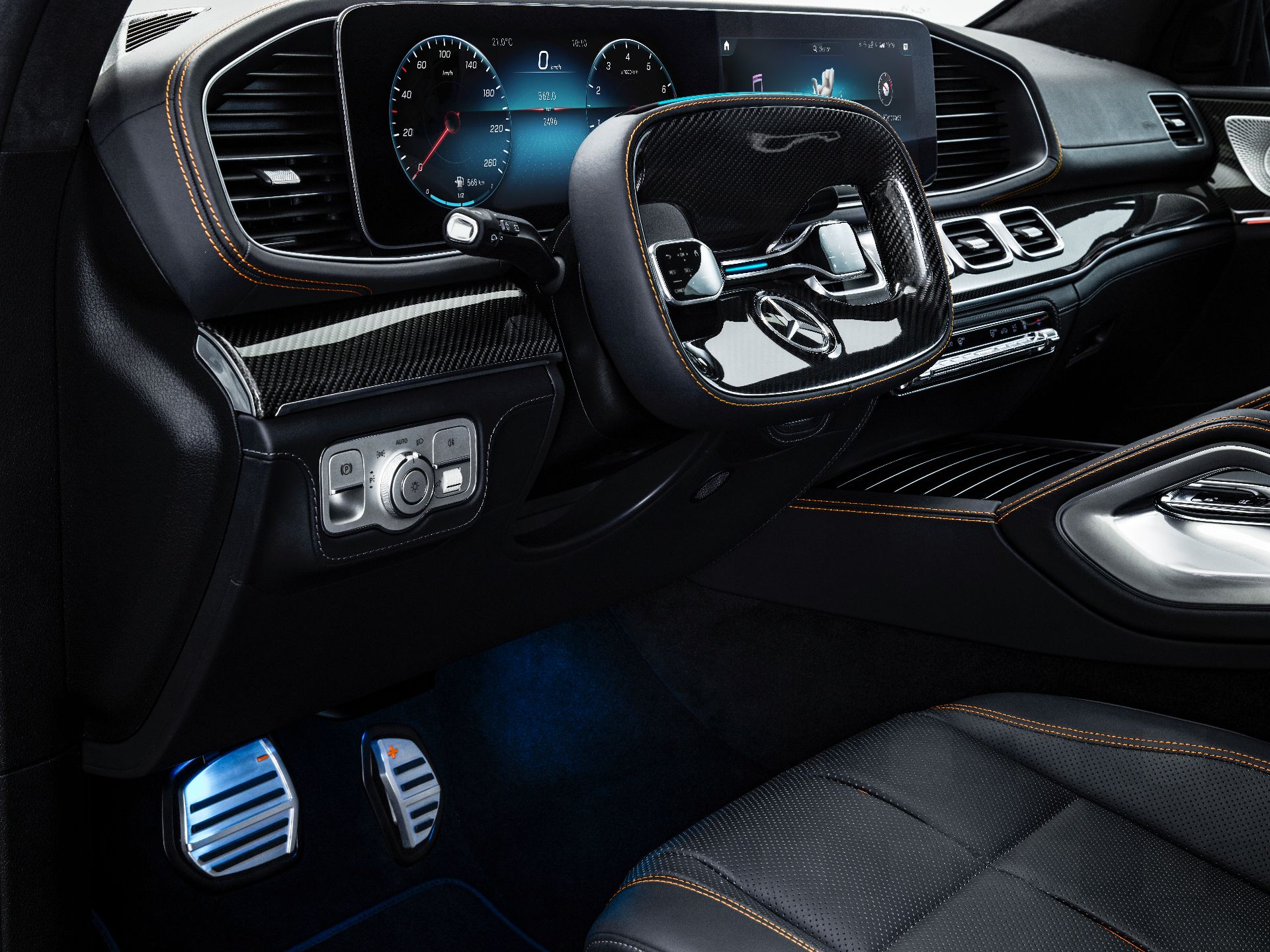
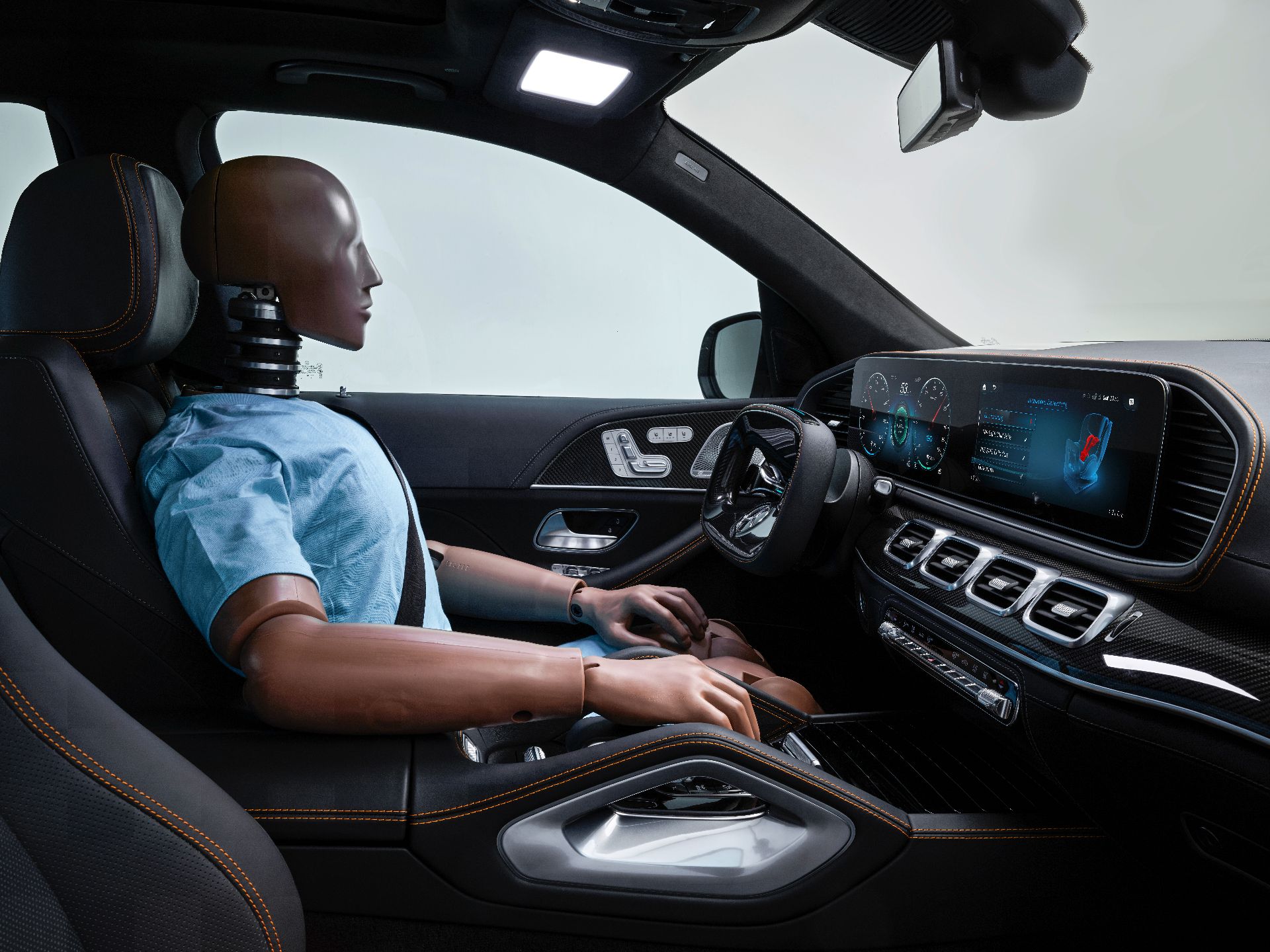
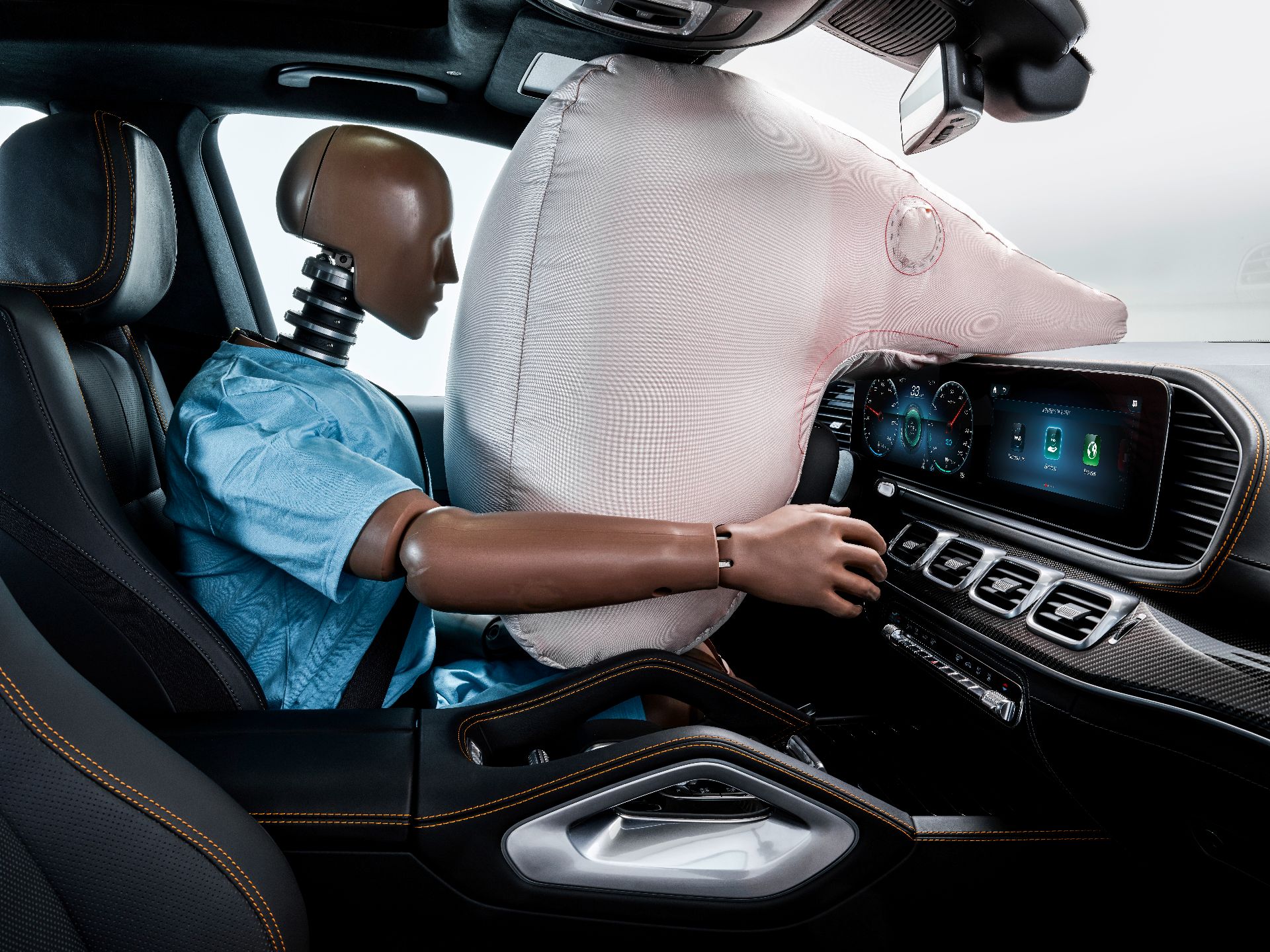
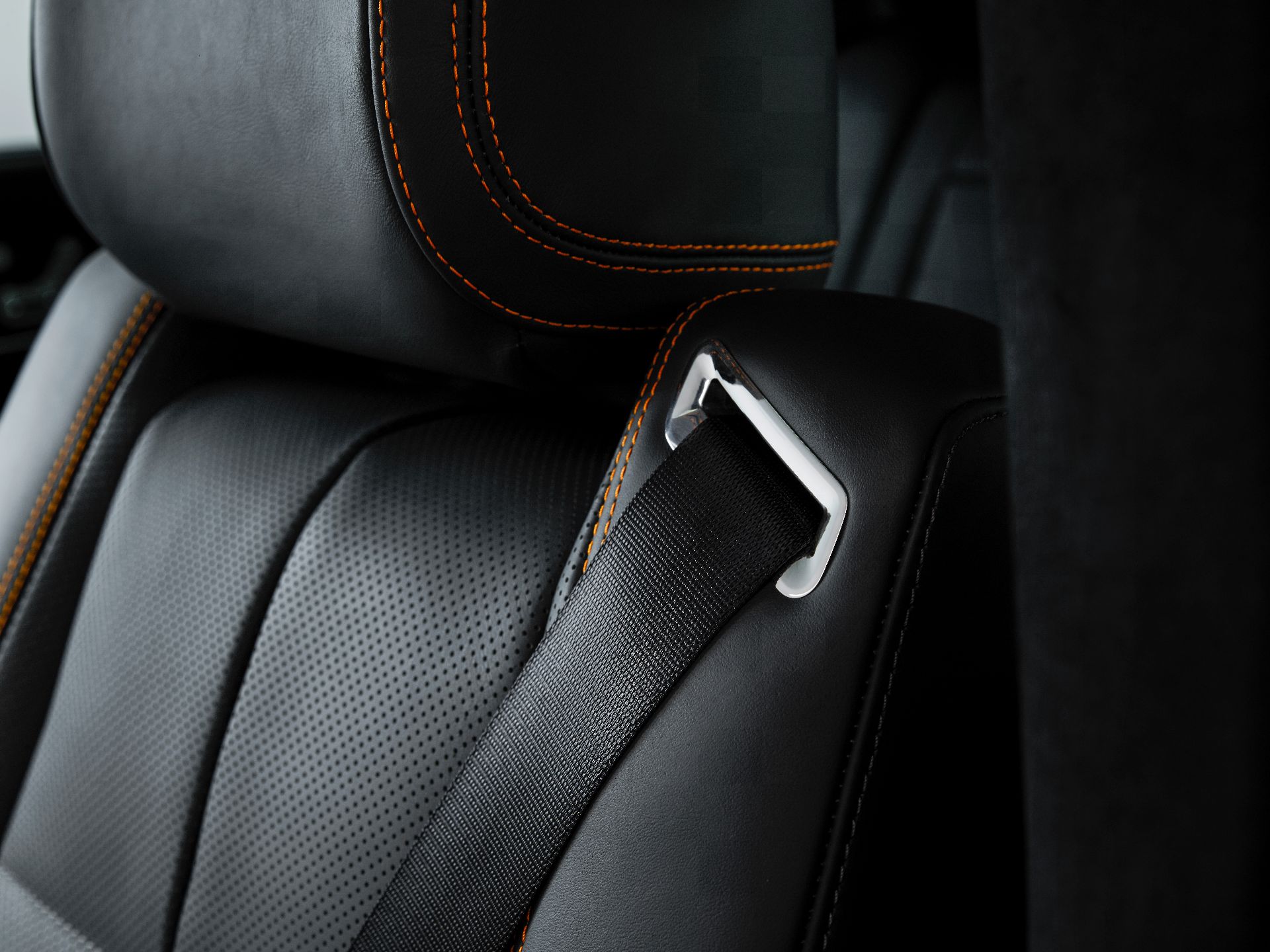
All-round driver safety: When the ESF 2019 is driving in automated mode, the steering wheel and pedal cluster are retracted to reduce the risk of injury during a crash. The greater interior flexibility requires new ideas for restraint systems (seat-integrated belt) and airbags with alternative installation spaces (driver airbag in the dashboard, integral sidebag in the side bolsters of the seat backrests). However, the ESF 2019 also has ideas for a manual driving mode: With daylight-like light from the sun visor, vitalising interior light can help to keep the driver alert.
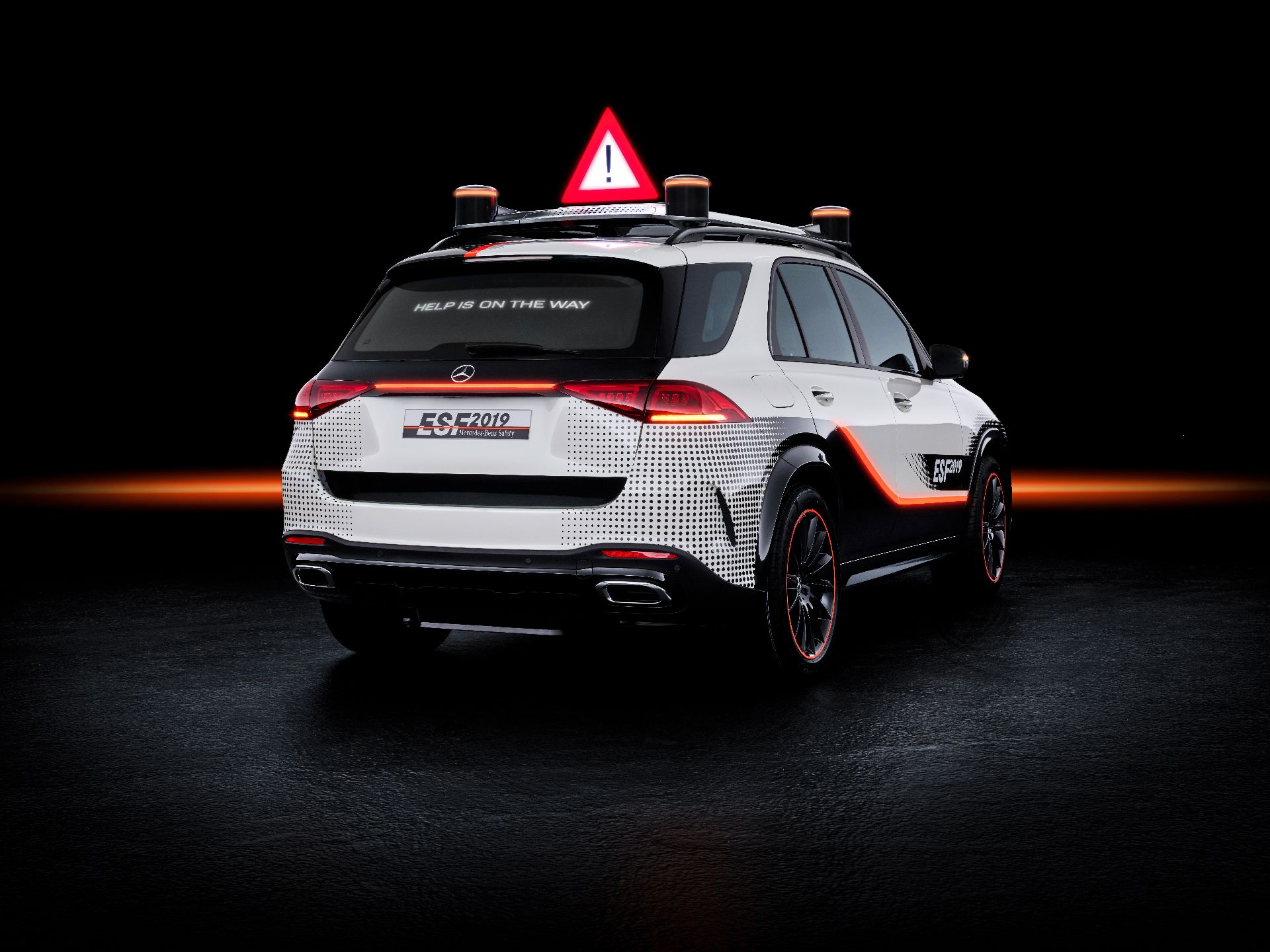
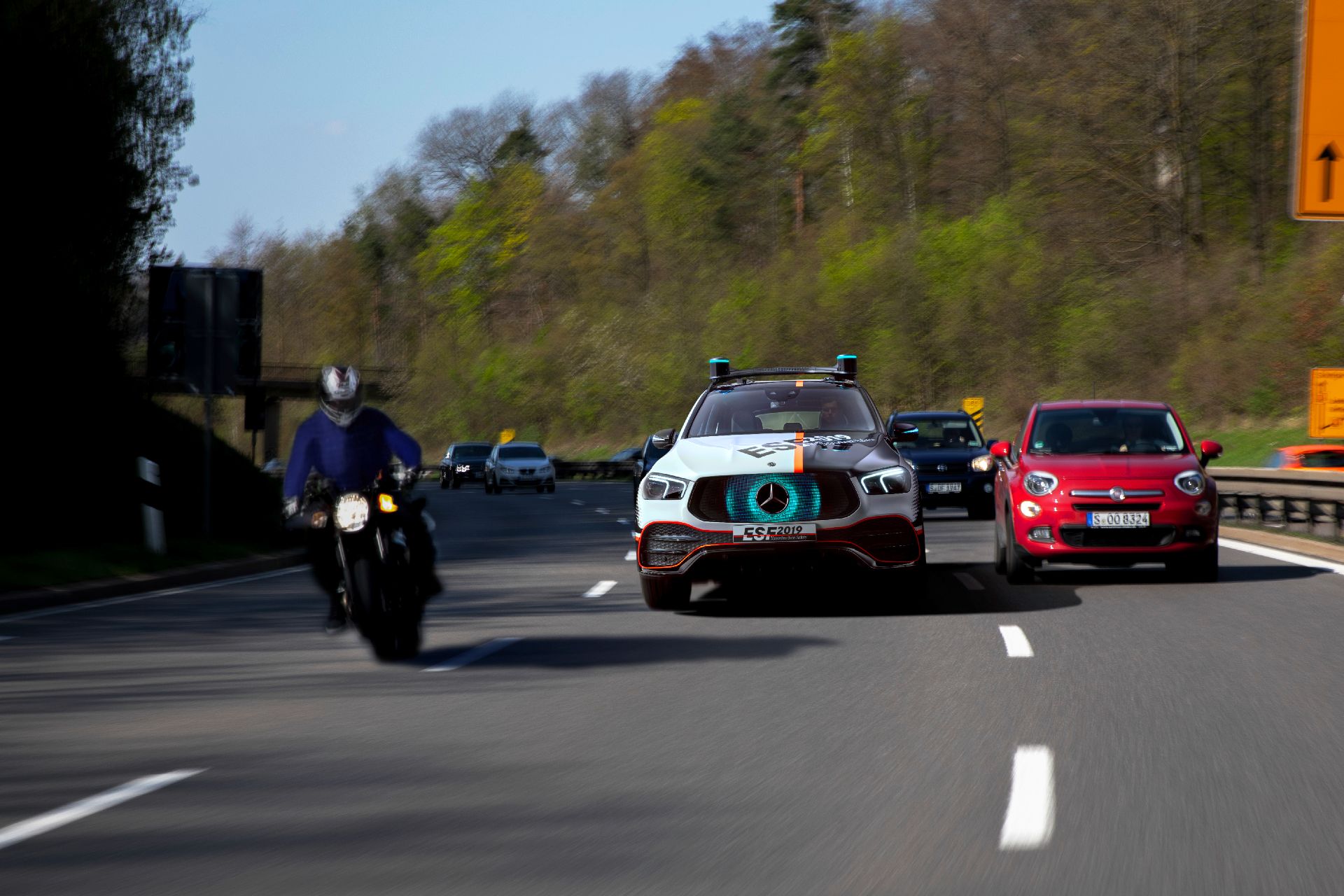
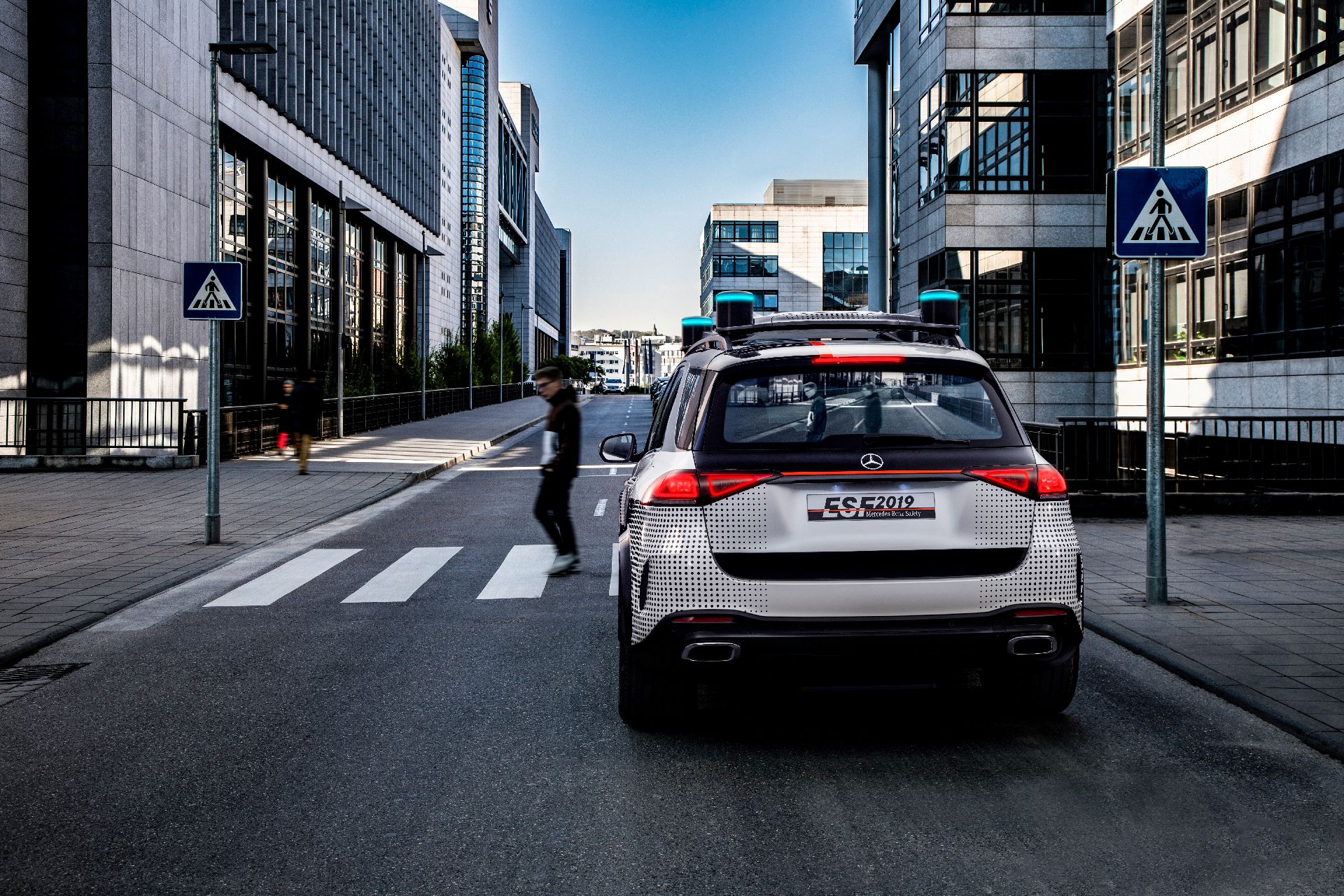
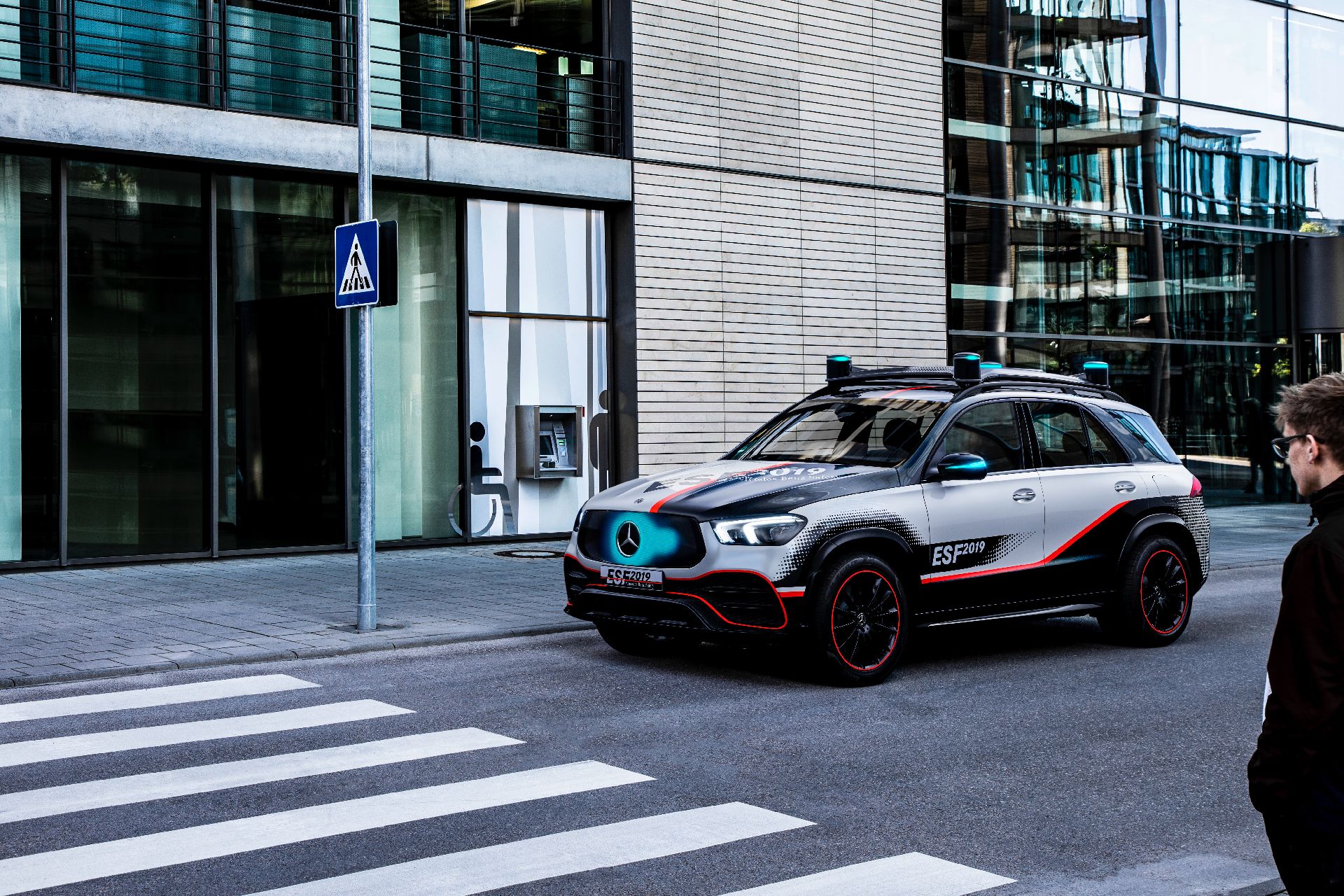
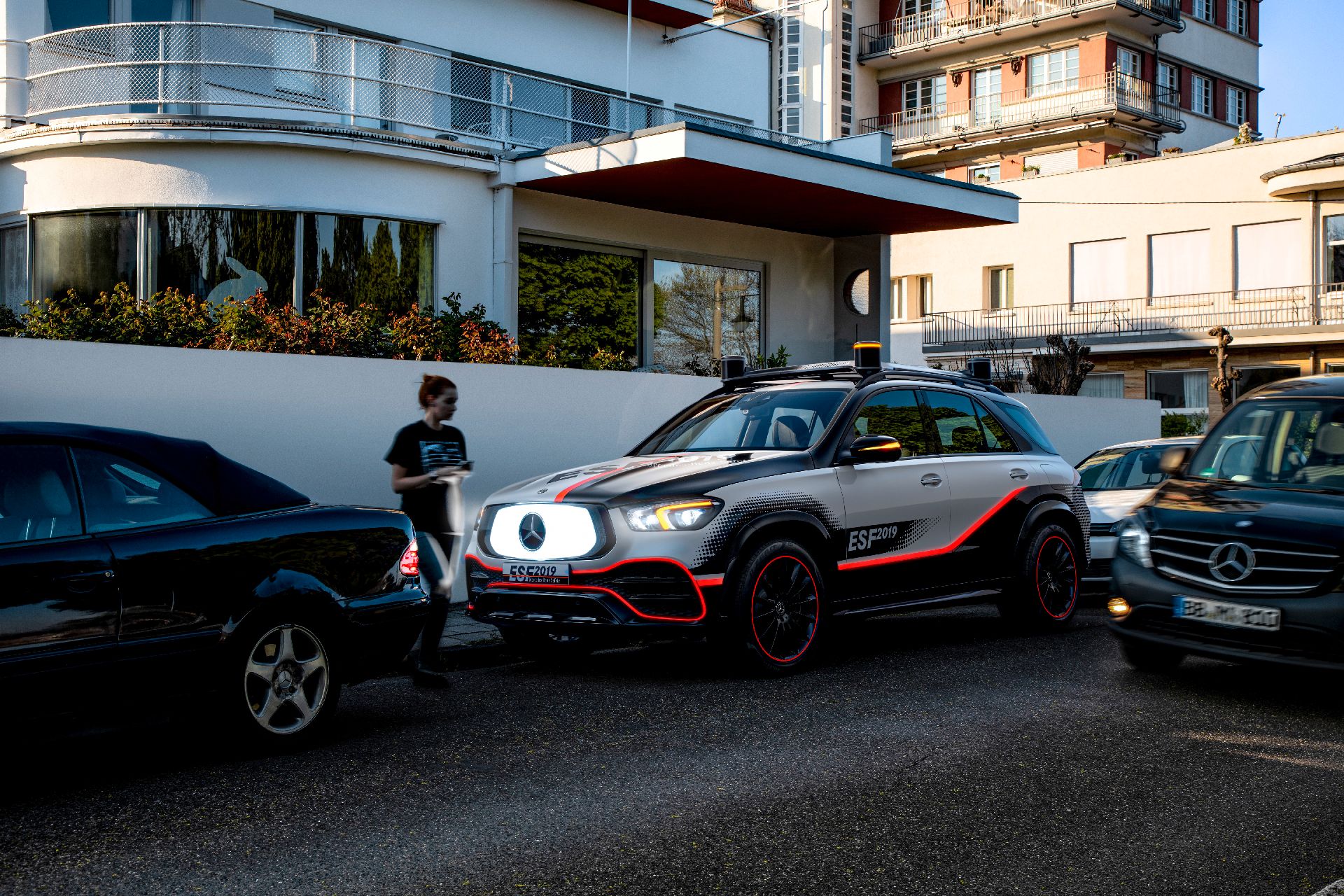
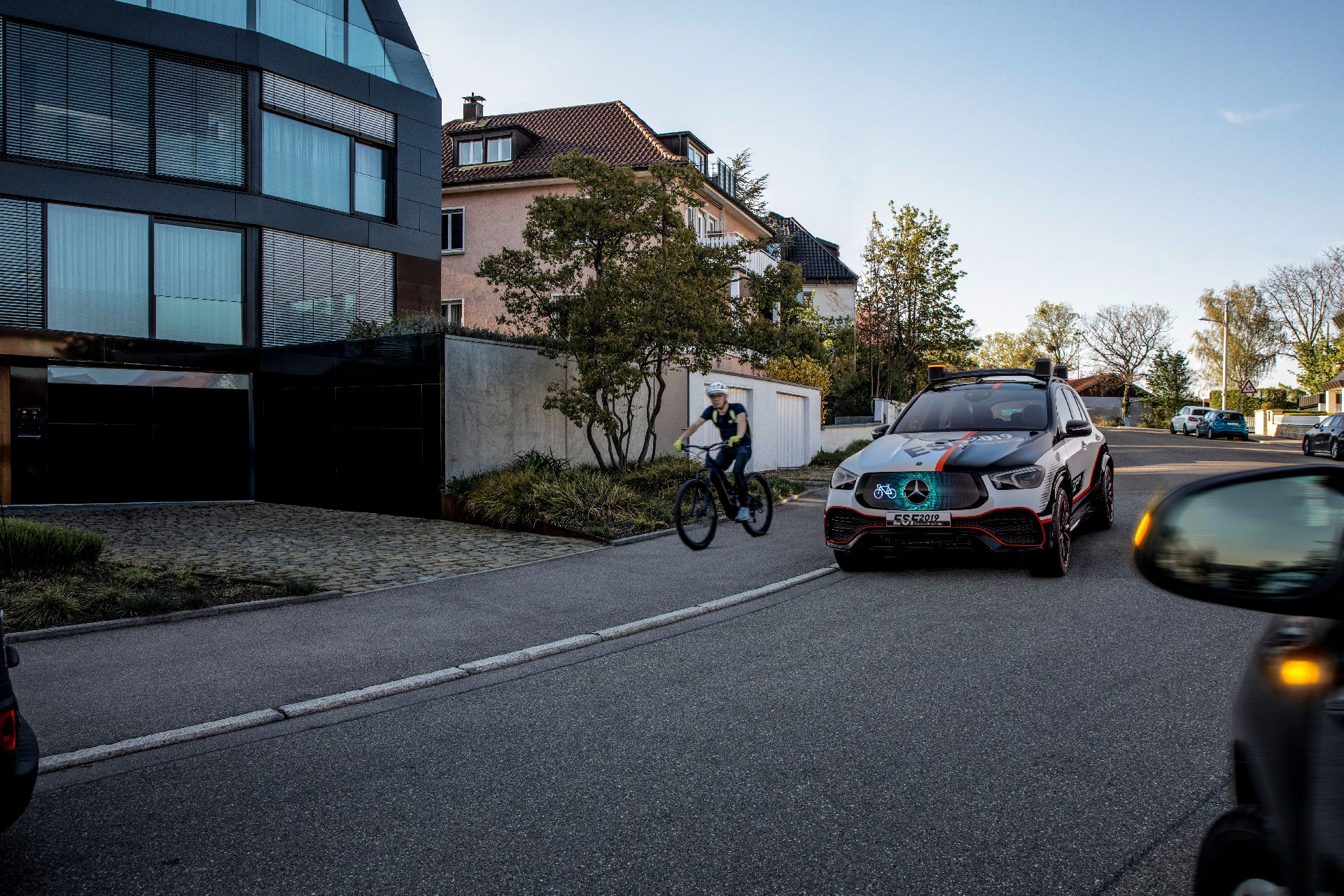
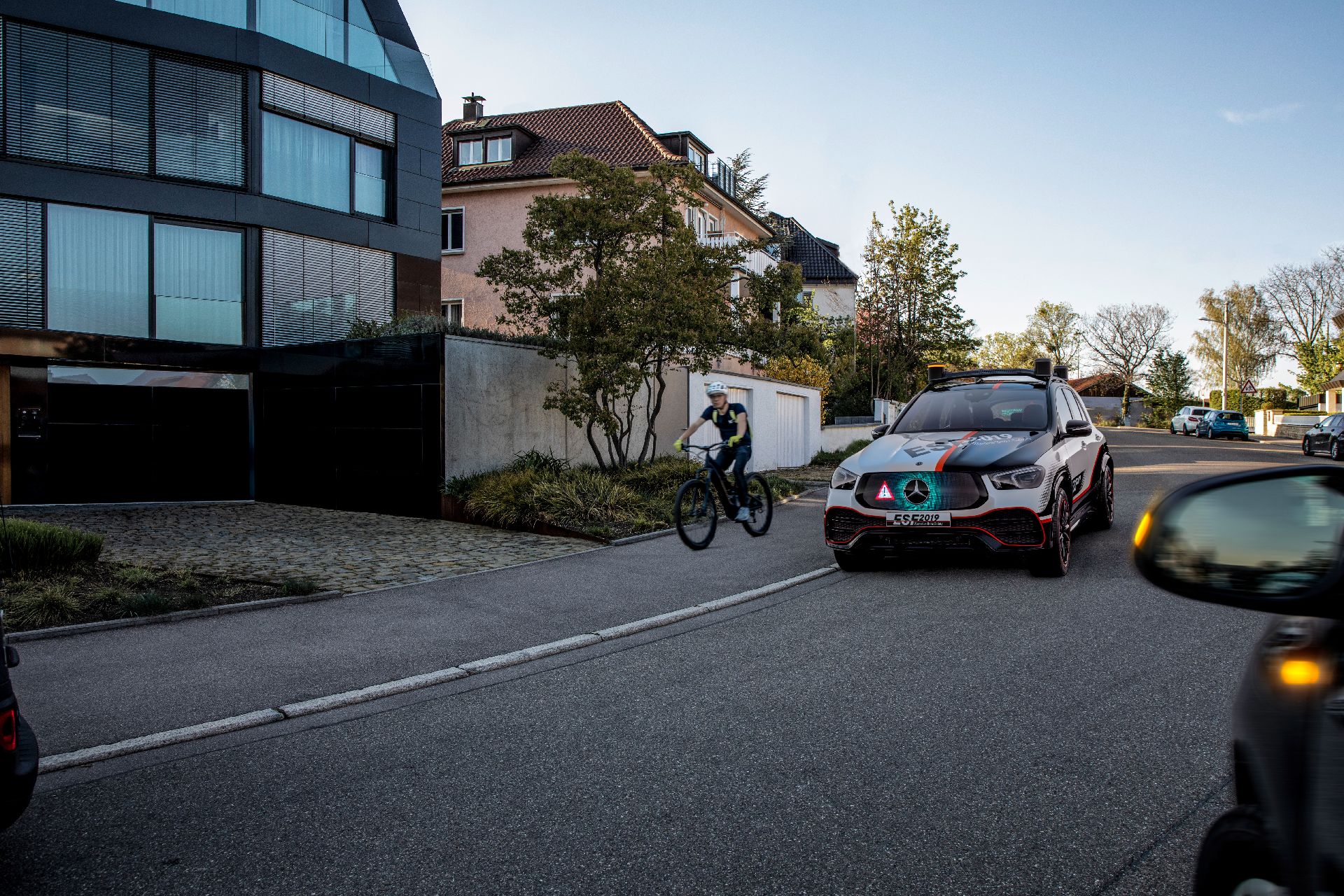
Cooperative communication with the environment: For people to gain trust in the automated vehicle, they must immediately and intuitively be able to recognise what it intends to do. In this respect the ESF 2019 takes human road users very much into consideration. Its sensors not only keep an eye on the traffic, it communicates in all directions and can also warn other road users. The ESF 2019 is also equipped with the revolutionary headlamp technology DIGITAL LIGHT, with practically dazzle-free high beam in HD quality and a resolution of more than two million pixels.
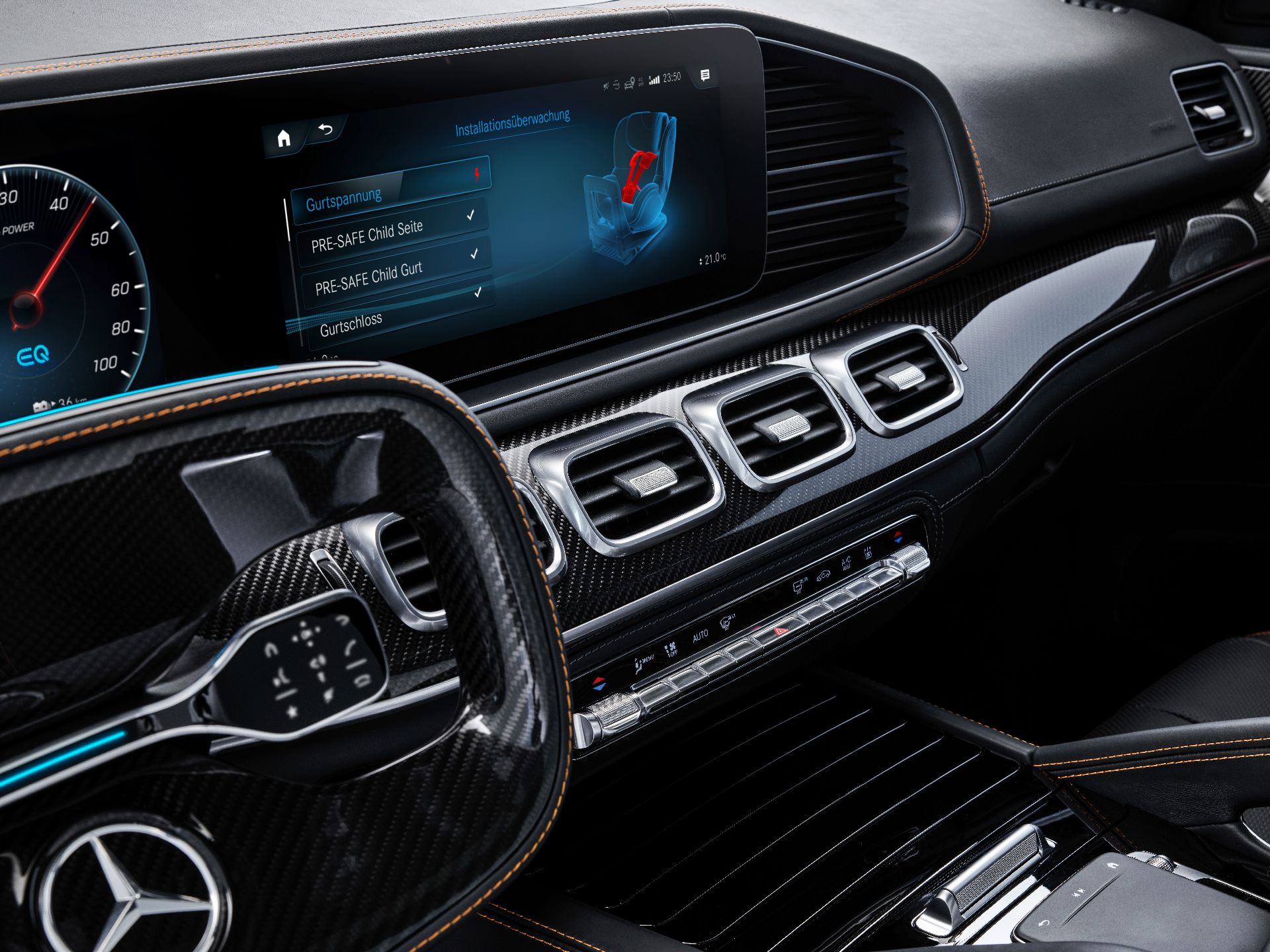
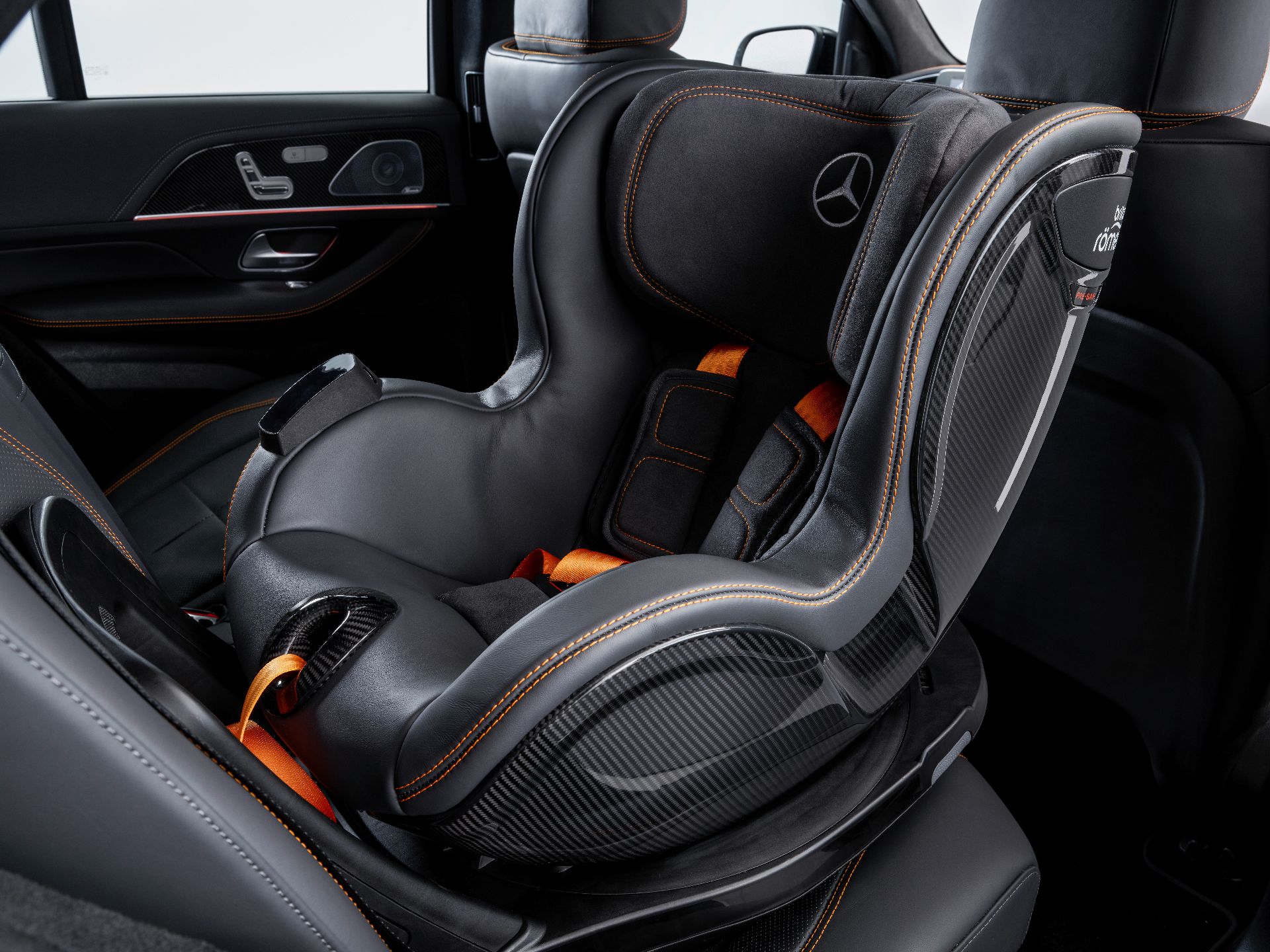
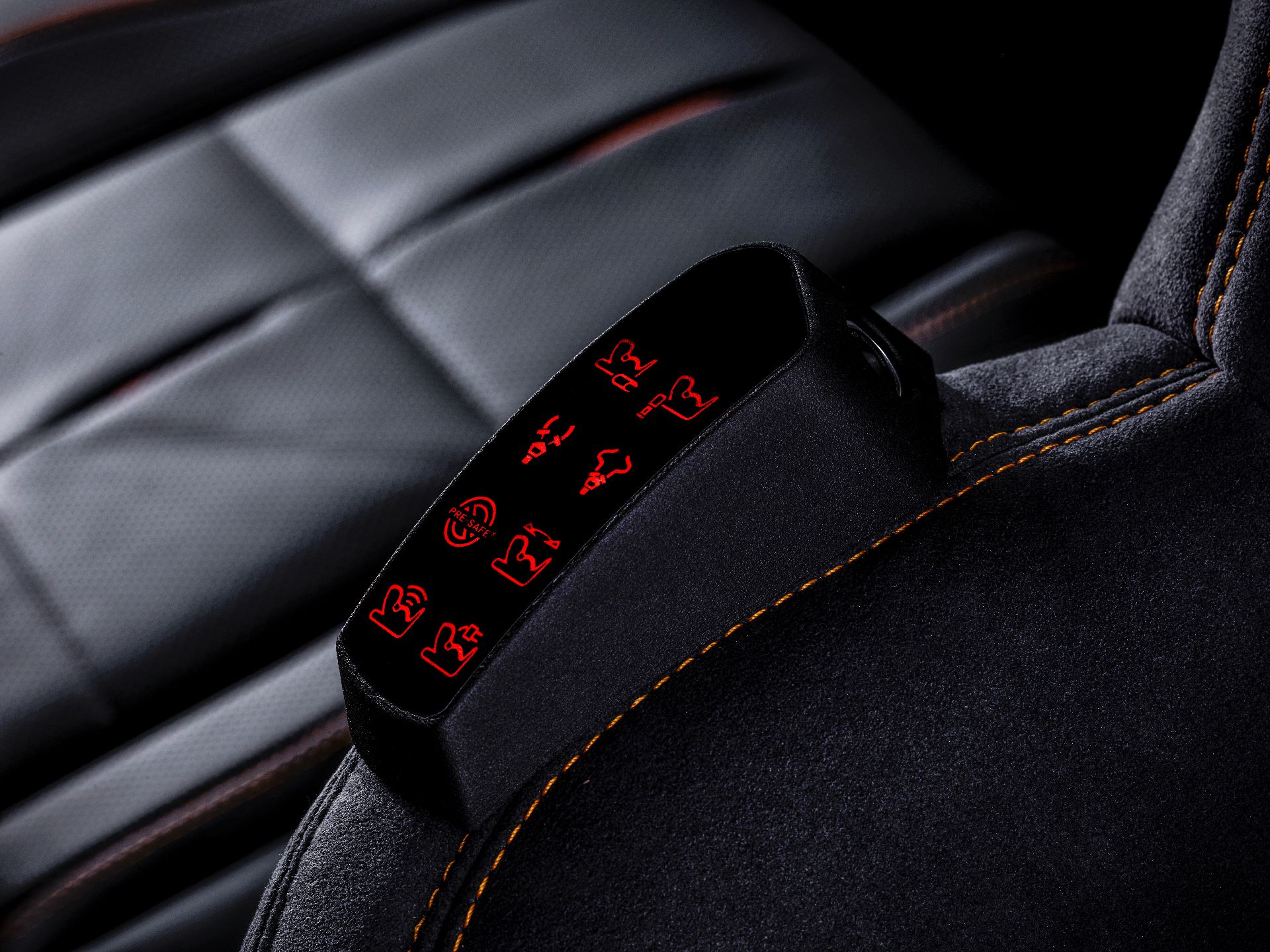
Child safety: With the child seat concept PRE-SAFE® Child, the seat belt is preventively tensioned and side-mounted impact protection elements are extended before a crash. Thanks to the tensioned belt, the child is more firmly and accurately fixed in the seat while belt slack is reduced. This considerably reduces the loads acting on the child. Monitoring of seat installation and the child's vital signs are other functions integrated into the seat.
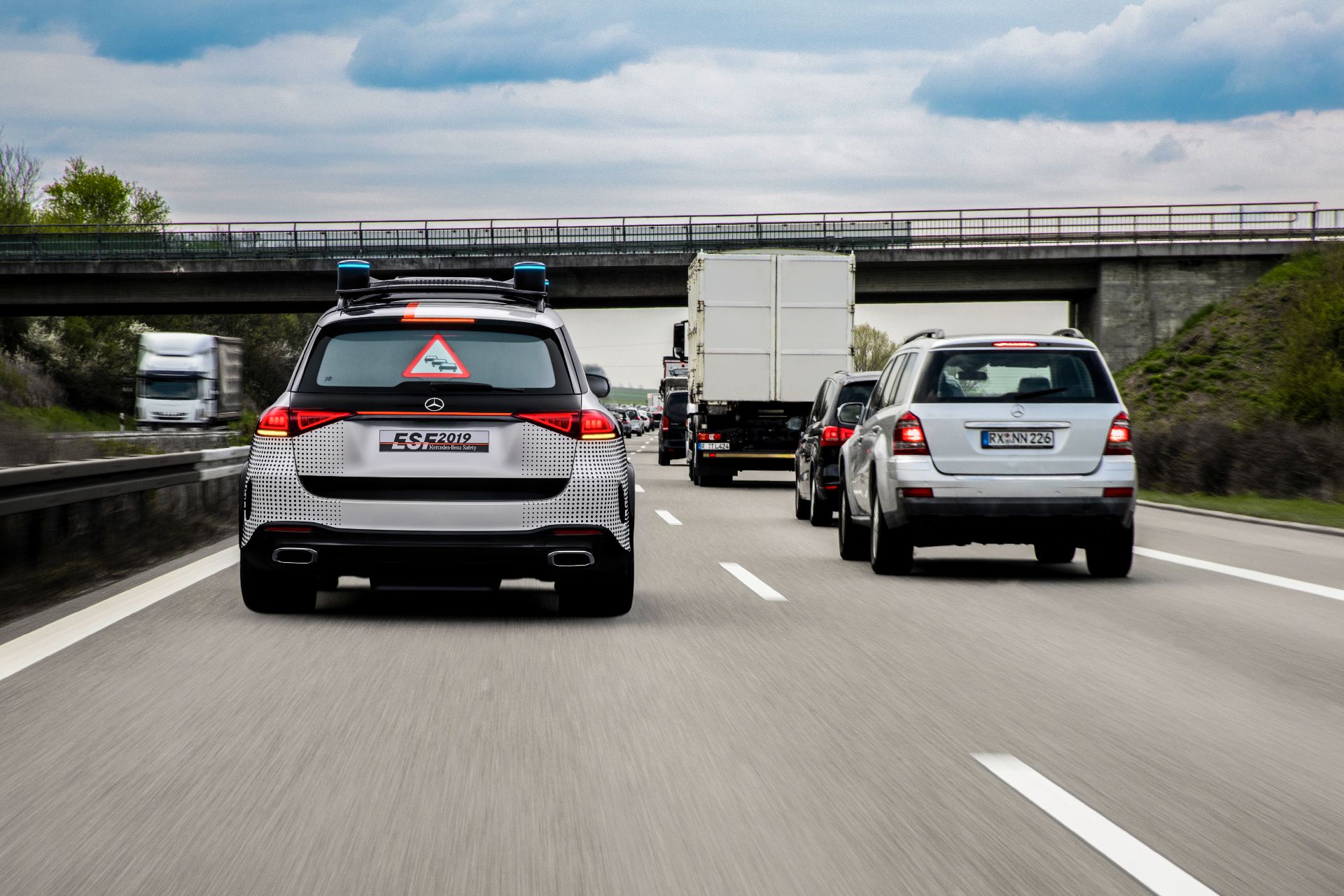
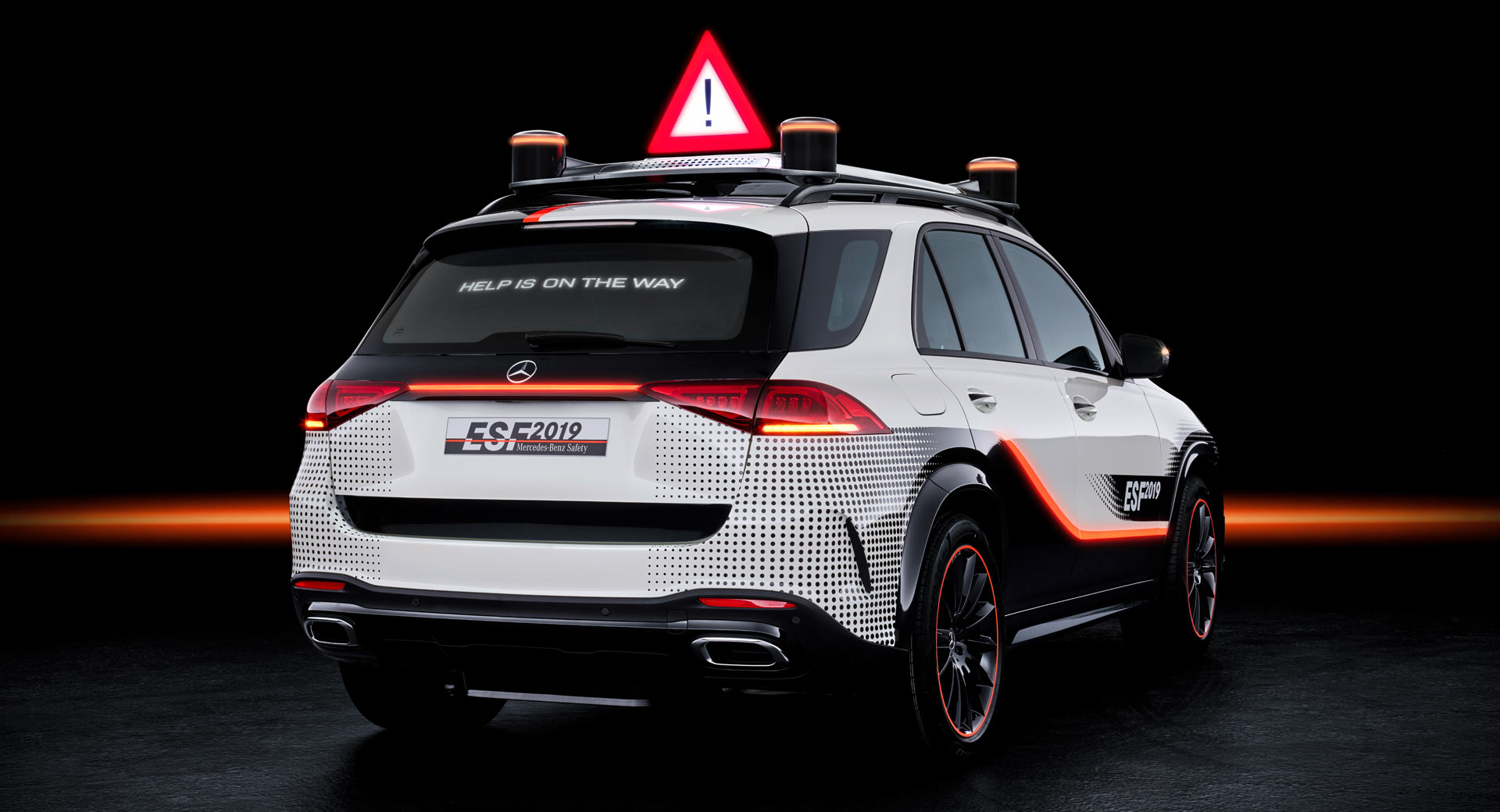
Securing traffic hazards: The ESF 2019 shows how the scenes of accidents or breakdowns could be secured more safely with innovations such as a small robot that automatically emerges from the vehicle's rear following an incident, and positions itself at the roadside as a warning triangle. Other ideas are a warning triangle that folds out of the vehicle roof at the same time, and the rear window as a communication surface.
New PRE-SAFE® functions: PRE-SAFE® Curve (which uses the belt tensioner to warn the driver that he/she has possibly underestimated an approaching bend) and PRE-SAFE® side lights with electro-luminescent paint can defuse potentially hazardous situations. PRE-SAFE® Impulse Rear is able to extend the protection of passengers and others involved in an accident at the end of a traffic tailback.
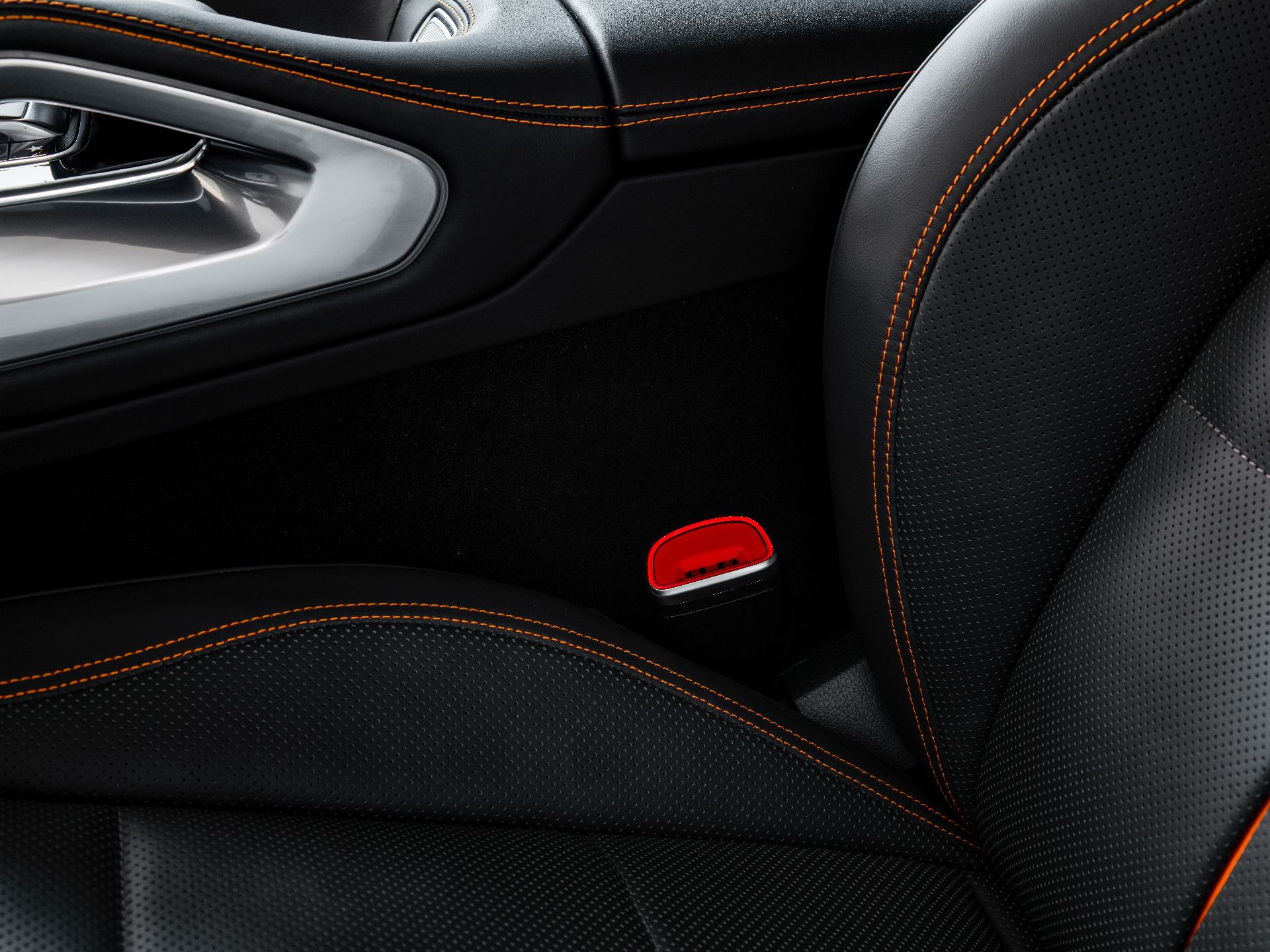
Safety and comfort in the rear: An innovative rear airbag uses a special new inflation concept to deploy and position the airbag. It has a special tubular structure for this purpose. With belt-feeders, belt buckle illumination, USB belt buckles and belt heating, the ESF 2019 implements a number of ideas by which passengers on the rear seats might be motivated to wear seat belts using new methods.
Active safety: Active Brake Assist with extended functions in the ESF 2019 provides additional protection, especially in potentially dangerous traffic situations with unprotected road users. When turning, it now also detects pedestrians and cyclists moving in parallel to the original direction of travel. If a collision with unprotected road users crossing the road into which the vehicle is turning is imminent, the driver receives a visual and audible warning. Autonomous braking is initiated if the driver fails to react. The same also applies if there are any cyclists in the blind spot when turning to the right. If there is a risk of collision with cross-traffic when turning off or crossing a road, the system now prevents the driver from moving off and, if necessary, stops the vehicle, including from walking speed, by means of autonomous braking. The 360° pedestrian protection system warns and assists while parking and manoeuvring if there is a risk of collision with more vulnerable road users (pedestrians, cyclists), right up to autonomous braking.
"Real Life Safety" philosophy: learning from real accidents
In its safety development work, Mercedes-Benz takes its lead from real accidents for the protection of all road users. This Real Life Safety philosophy not only includes simulations and crash tests, legal requirements and published ratings. On the basis of what actually happens in accidents, it develops strict in-house safety regulations that in many cases go well beyond the legal provisions or rating requirements.
The key is accident research: for 50 years, in-house experts have examined serious accidents involving current Mercedes-Benz vehicles. The aim is to learn from them, and incorporate the findings into the designs of new models.
New ideas and safety concepts such as those shown in the ESF 2019 can be tested and validated e.g. at the Technology Centre for Vehicle Safety (TFS). Opened in November 2016, the TFS is part of the development centre in Sindelfingen and one of the world's most modern crash test centres. Mercedes-Benz has a wide range of test facilities at the TFS, so as to remain the trailblazer in vehicle safety.
The history of the ESF models: from research to series production
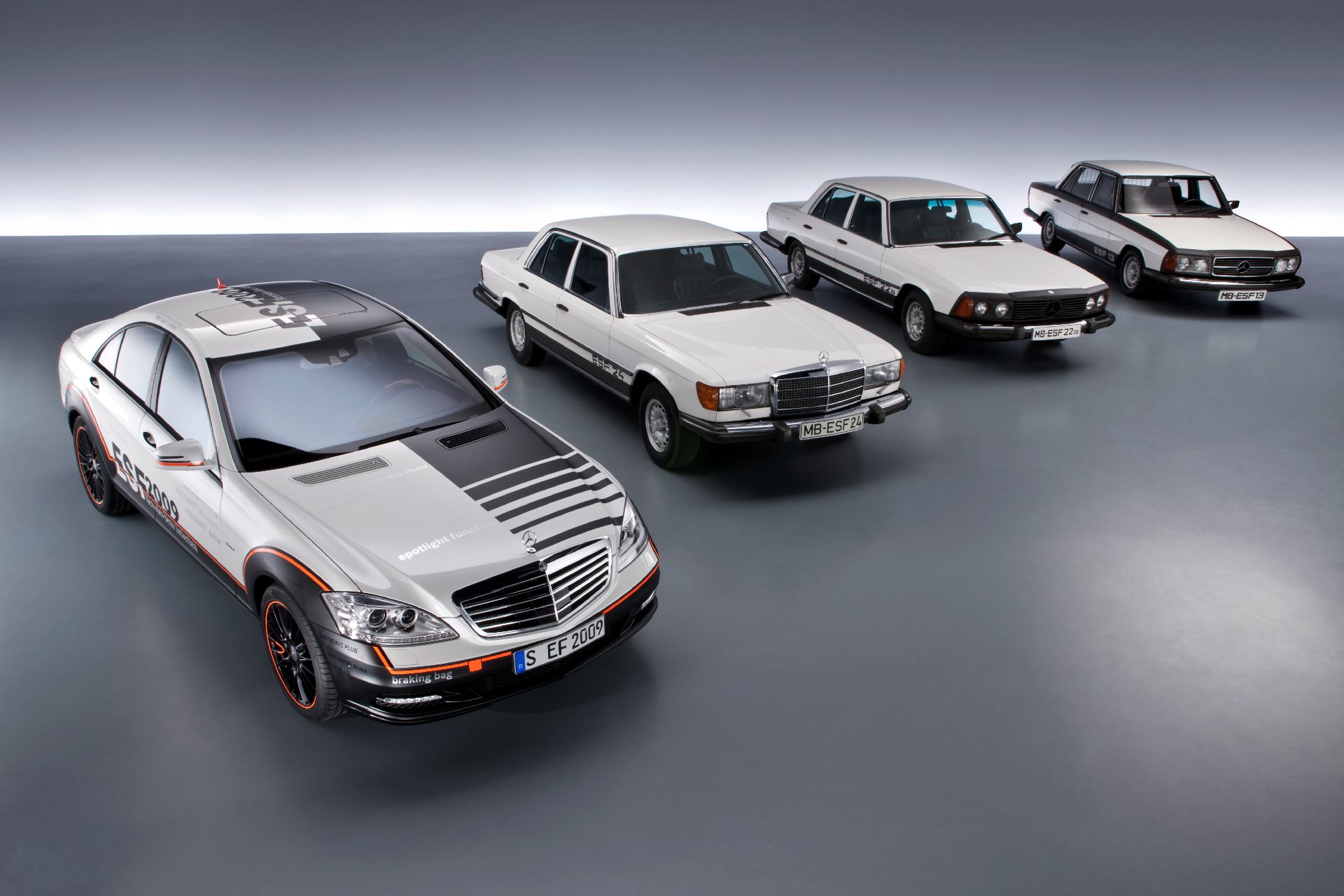
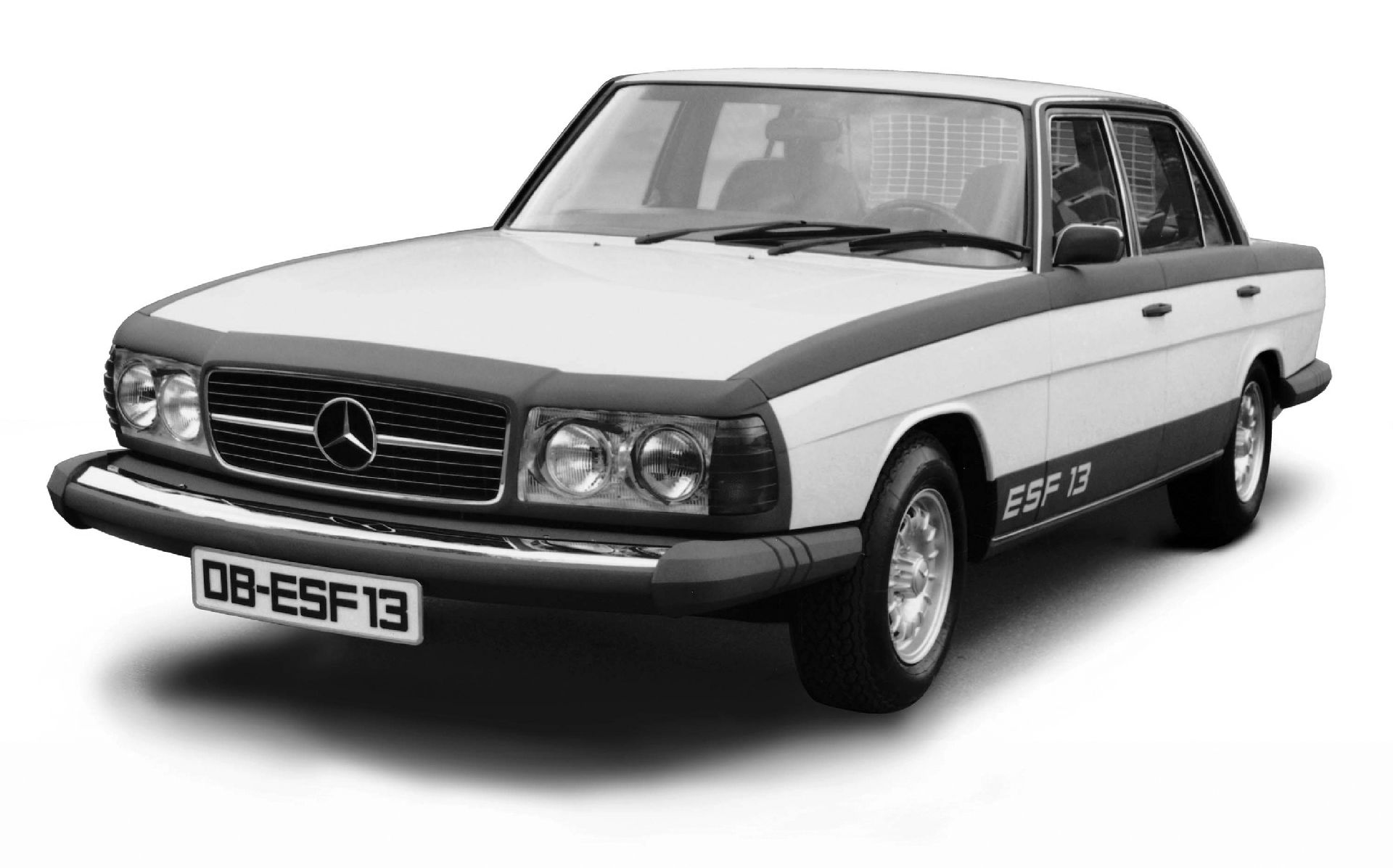
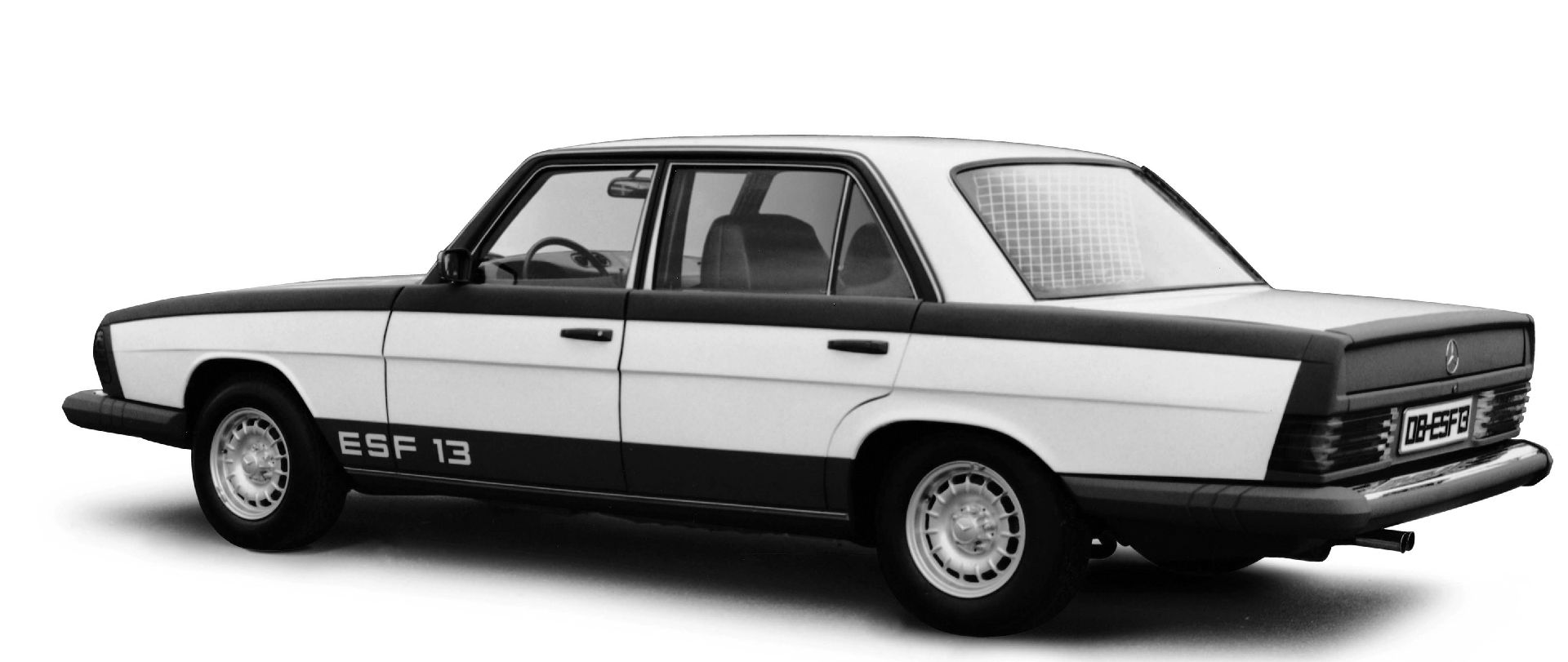
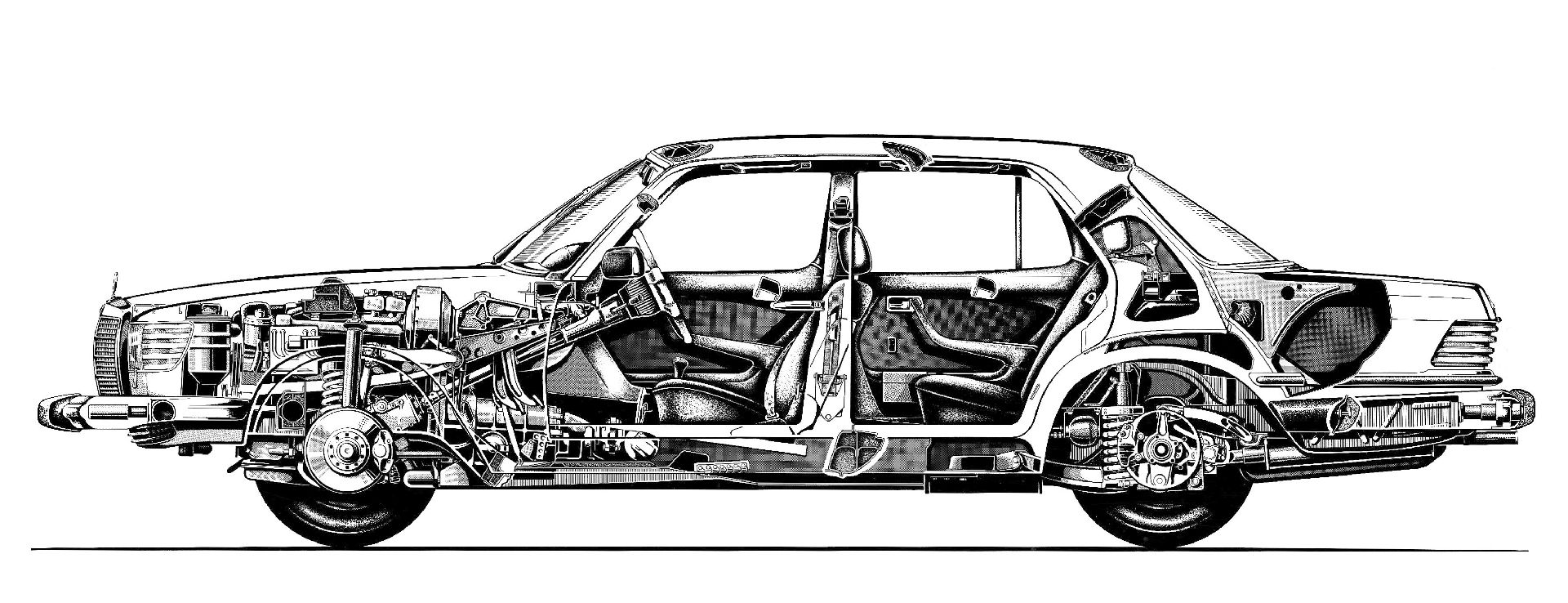
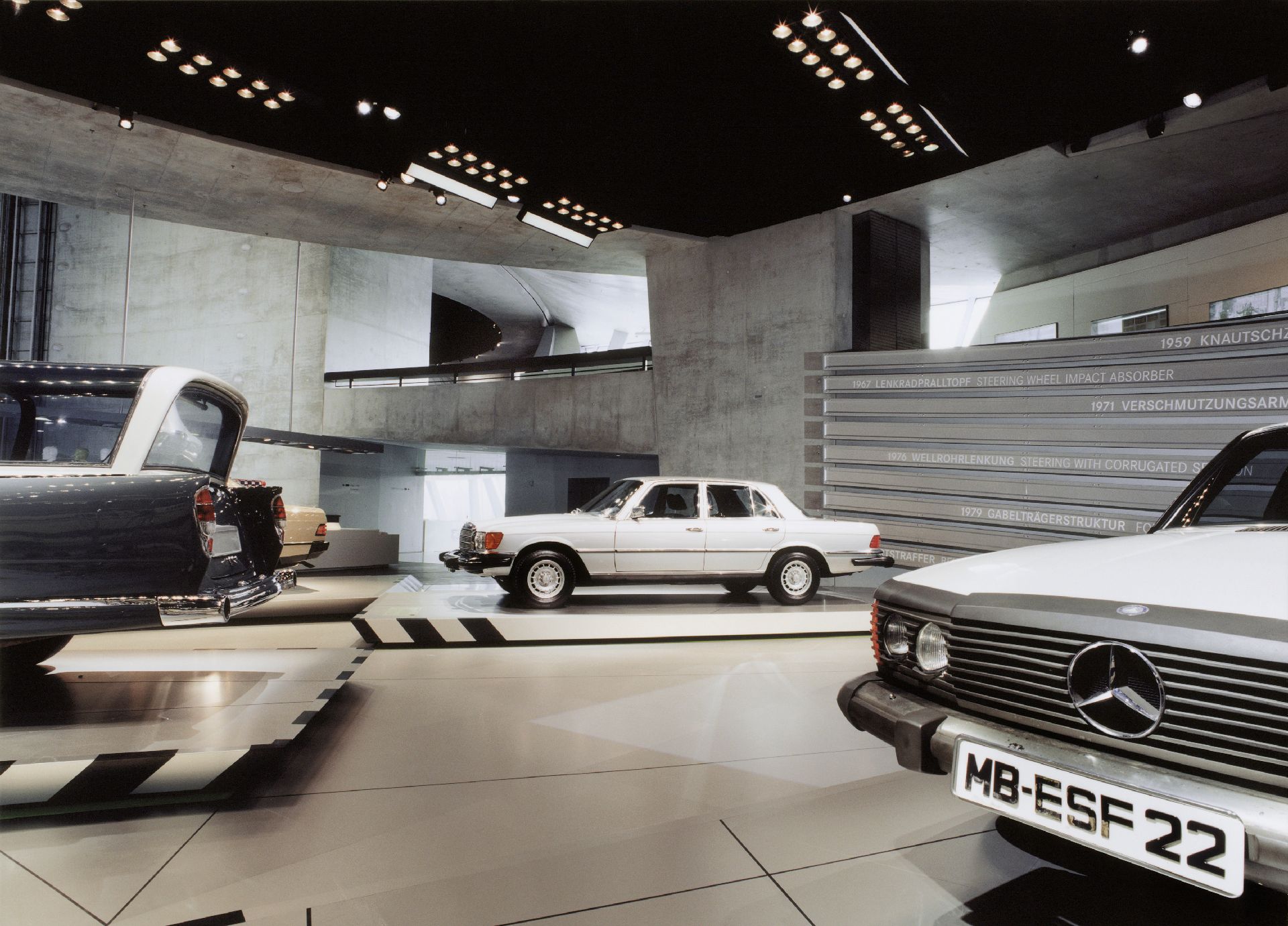
Mercedes-Benz is continuing a long-standing tradition with the ESF 2019: For the ESV Safety Conferences held from 1971 to 1975, the safety experts built more than 30 experimental vehicles which they crash-tested to achieve the always visionary safety objectives of Mercedes-Benz. Four of these vehicles – ESF 5, ESF 13 (both based on the medium-class W 114/"Stroke/8" series), ESF 22 and ESF 24 (both based on the W 116-series S-Class) – were presented to the public.
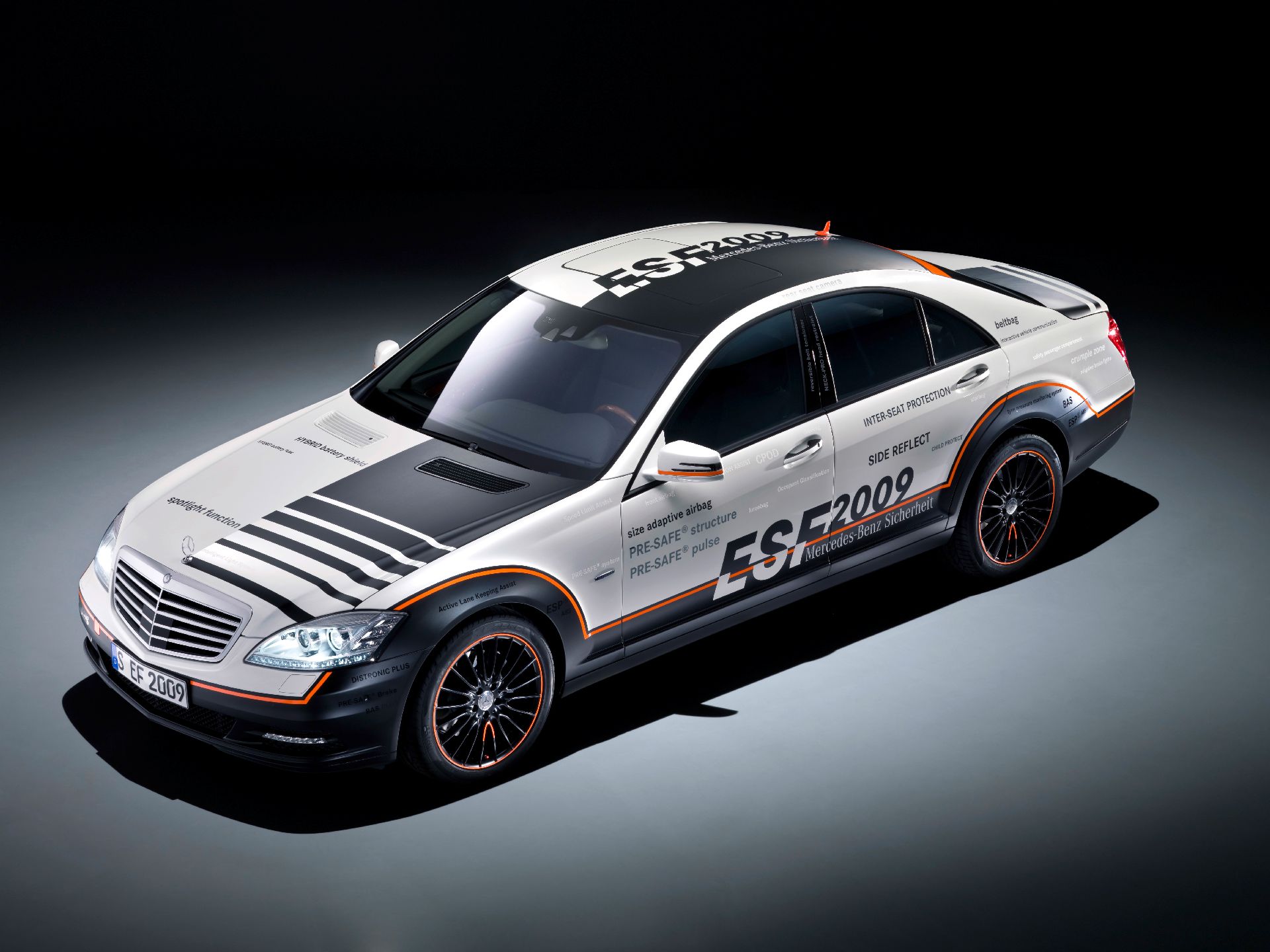
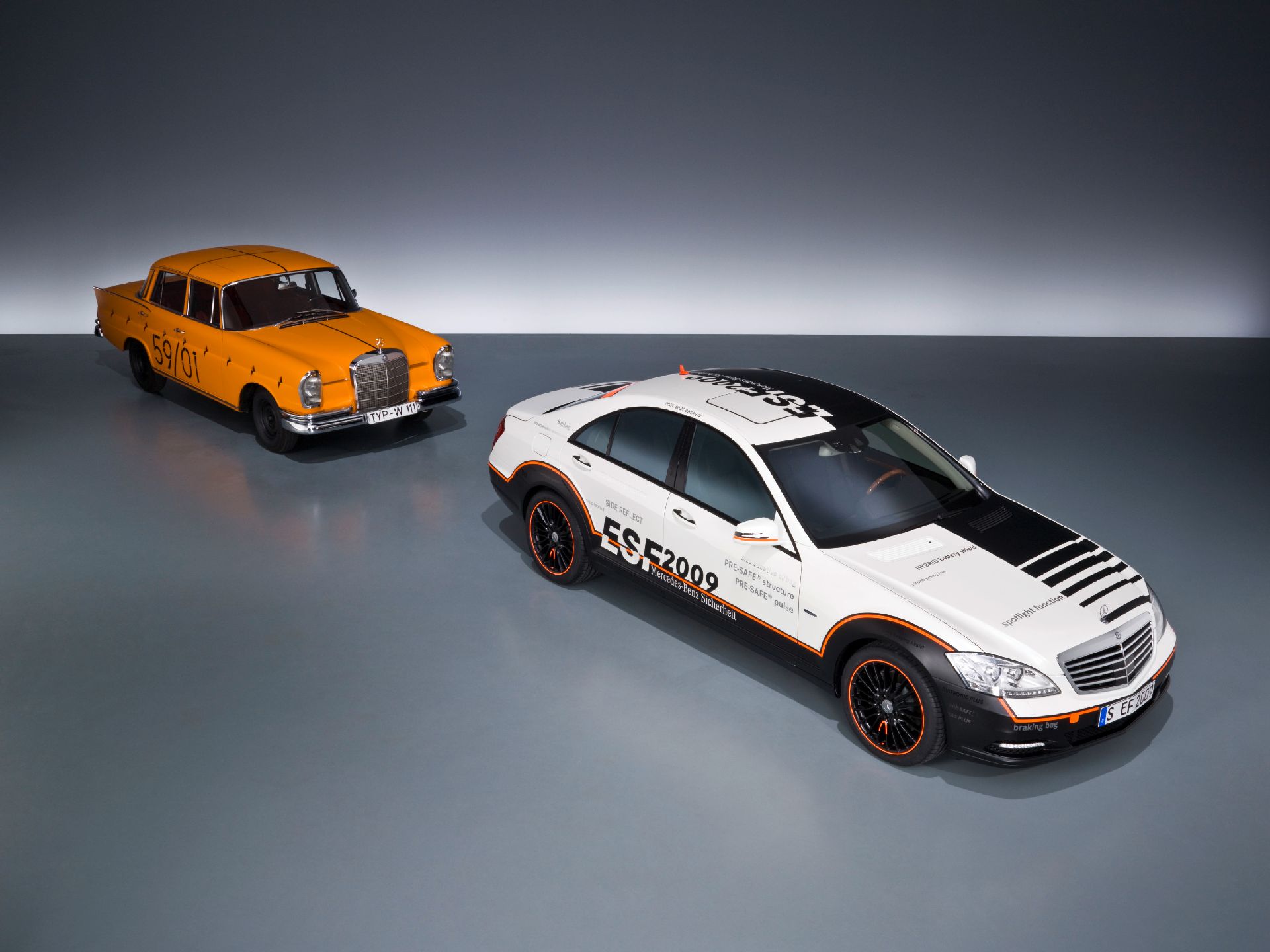
The first ESF vehicle for many years, and the direct predecessor to the ESF 2019, was the ESF 2009. This research vehicle celebrated its premiere on 15 June 2009, at the 21st ESV (Enhanced Safety of Vehicles) conference) in Stuttgart. Numerous innovations in the ESF 2009 have meanwhile entered series production. These include e.g. the beltbag available for the S-Class, PRE-SAFE® Impulse Side for the E-Class, CLS and GLE and Active High Beam Assist Plus, which is available for many model series.
Comments
Post a Comment