The History and Development of the C4 CORVETTE

Porsche 356 Roadster Copy + Paste

The “No. 1” always wore custom-made suits. Back in 1948, tinsmith Friedrich Weber spent two months clothing the first Porsche. The original apparel didn’t last very long, however, for the roadster not only changed hands many times over the years. It was damaged and repaired, modernized and converted. Its attire kept changing but its identity remained the same. It was shaped by history. Yet its essence remains inviolable.

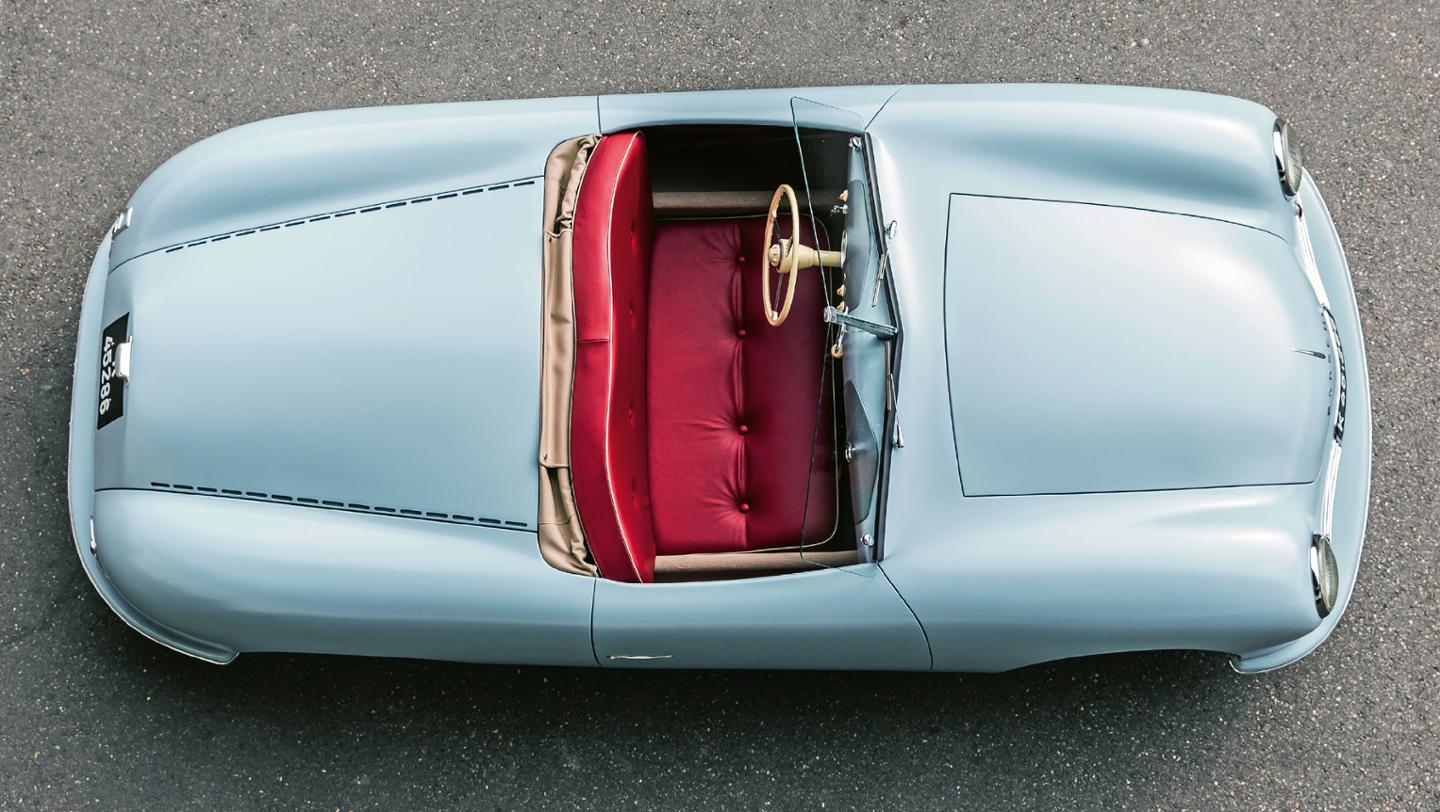
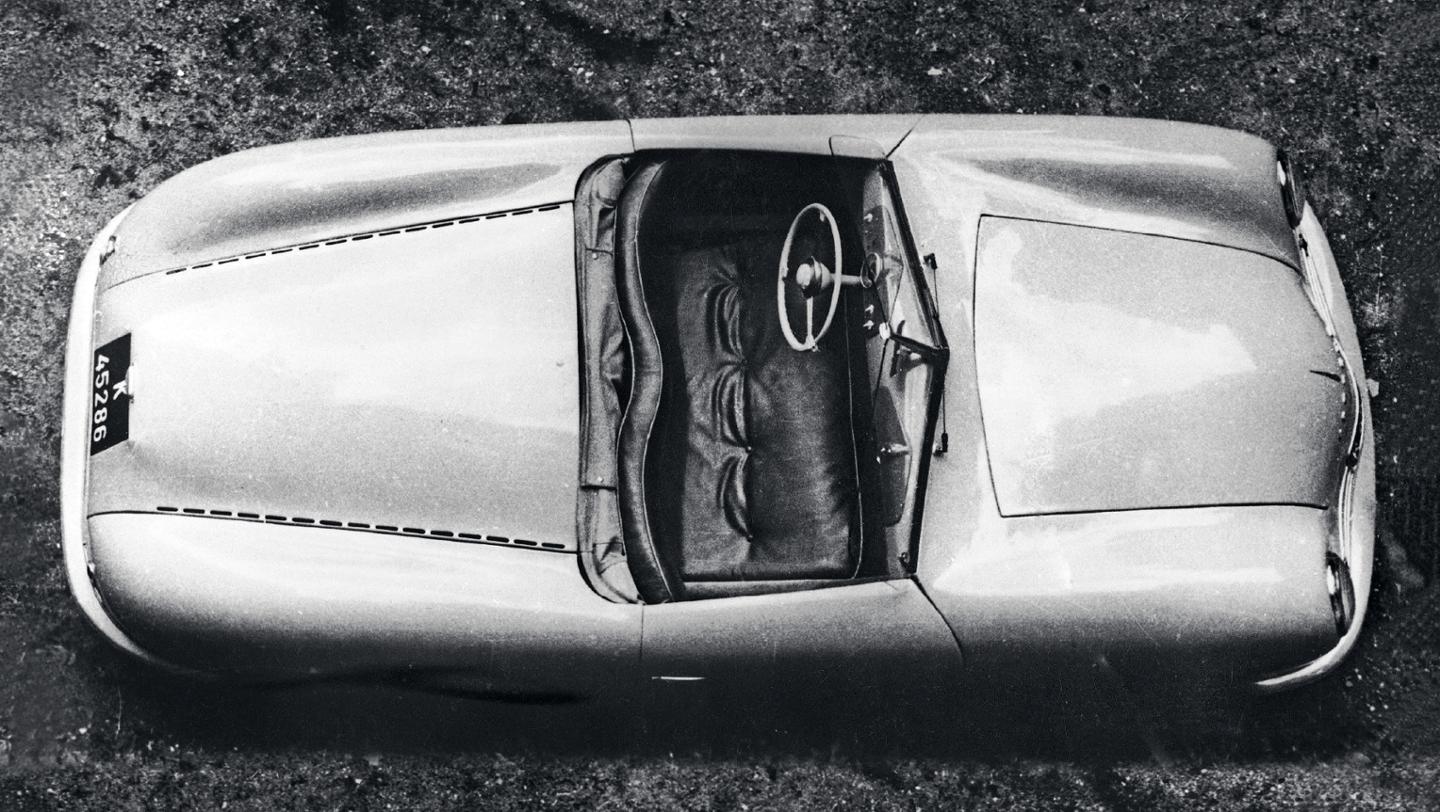
The original condition of the “No. 1” Roadster is lost and can no longer be restored. But its custom-made suit has been reconceived in something very close to the original form and reproduced using the same materials and techniques. This painstaking, manual labor of love, however, couldn’t be completed overnight. In their efforts to create a copy of the 1948 roadster body that’s true to the original in every detail and dimension, experts from the Porsche Museum first made a 3-D scan of the existing vehicle. A computer then superimposed these virtual results onto the design drawings from 1948, which had been scanned as well. This revealed a number of deviations. Step by step, the radii from a fixed point were modified to match the original form. Archive staff members consulted all the original photos available, studied drawings, and analyzed journals. Finally, a computer-assisted milling machine carved out a life-size model of the car from a block of rigid foam.

When placed next to the car from 1948, some significant differences are evident. The original roadster’s body tapered more to the rear. Its front had a more pronounced nose. The original one-part rear lid, which folded at the back, extended from the passenger compartment to just over the rear bumper. It was later replaced on the roadster by a two-part construction with a lateral panel over the engine and a shorter hood over the rear storage space.

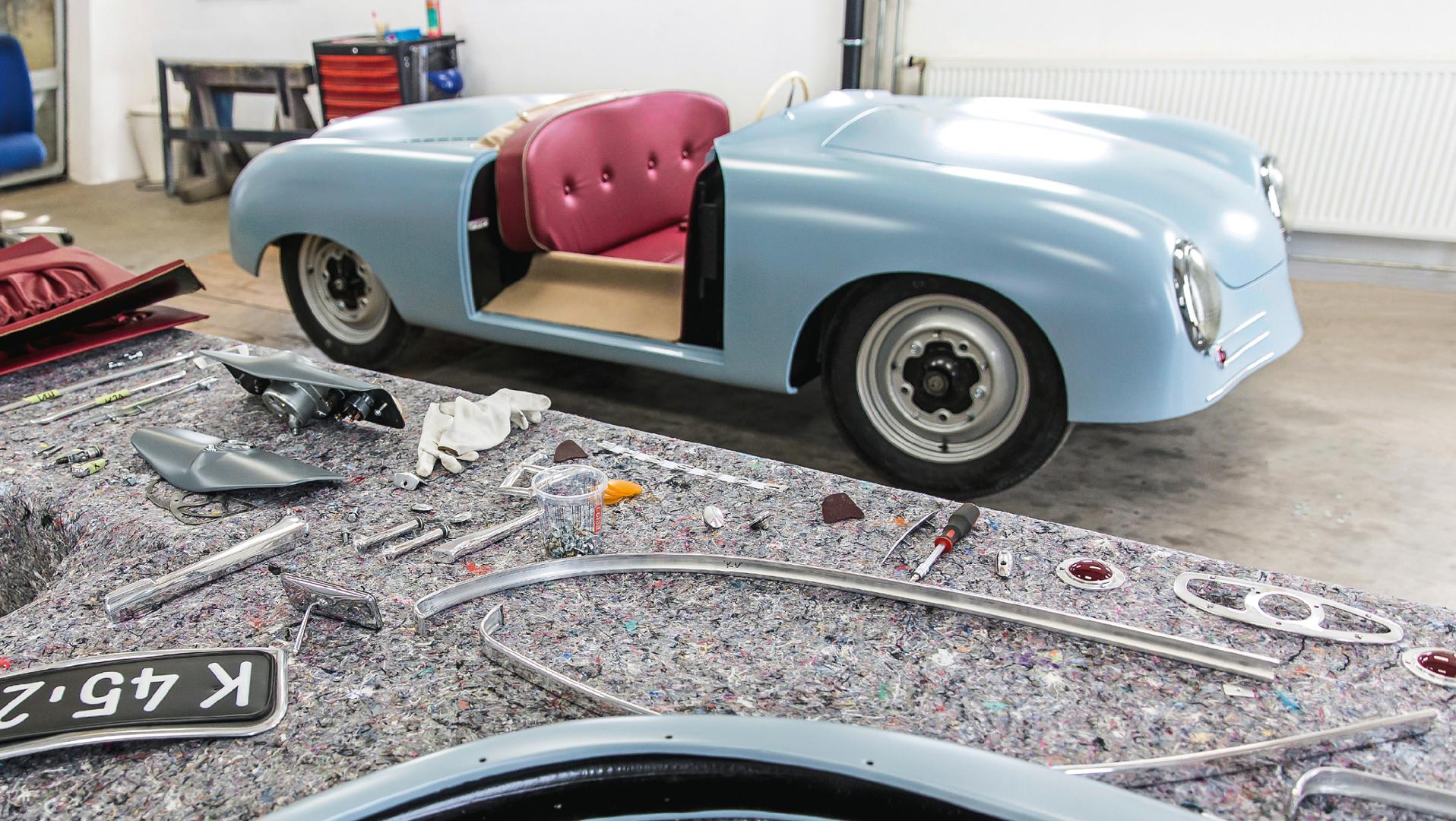
With the help of original wooden gauges, a replica of the original “No. 1” car body finally took shape—similar to the way in which the original aluminum body was made seventy years ago. In 1948 its metal sheeting was bent, pulled, and pushed using hand tools. This same meticulous attention to detail extended to formulating the color for the replica’s paint job. The original car had been painted over a number of times, so samples were taken from under the dashboard and analyzed in order to reproduce the original shade as closely as possible. Period fittings with dials adapted exactly to their original counterparts flank the steering column. Even the mats are knotted in the same way they were seventy years ago. The only thing the replica can’t do is drive. An engine won’t be placed into its mesh frame, and its rear axle consists of a simple pipe. The front axle—including the steering system and wheel—was taken from a Volkswagen Beetle, as with the original.

Comments

Popular posts from this blog

Cute girl drifting in rally car unfastened

The 9th Dream Car from the Top 10: GM-X Stiletto

When we think of dream cars, our minds often race to sleek designs, innovative technology, and that unmistakable feeling of pure, unbridled passion. The GM-X Stiletto encapsulates all of these elements and more, making it a worthy contender in our top ten list. Ranked at number nine, this concept car from 1964 remains a beacon of automotive ingenuity and a symbol of a bygone era that continues to inspire. A Journey Back to the Jet Age To fully appreciate the GM-X Stiletto, we must travel back to the 1950s and '60s, a time when America was captivated by the future. The jet-age was in full swing, and cars were designed with a sense of bold optimism. Under the visionary leadership of Harley Earl and Bill Mitchell, General Motors created vehicles that mimicked the sleek lines and advanced technologies of jet aircraft. The GM-X Stiletto, born in 1964, was a product of this era's boundless imagination. The Visionary Design The GM-X Stiletto was first unveiled at the 1964-1965 World’s...

【中継】日産モータースポーツファンイベント

10 Newest Cars and SUVs by South Korean Manufacturers (2025-2026 Lineup ...

Bass And Boobs + Skirt Trick & Can Trick

Chevrolet Concept Cars: Ten Of Our Favorites

Most celebrations of Chevrolet's centennial surround the automaker's production vehicles. Why not? After all, this is the brand that birthed legends like the Bel Air, Corvette, and Camaro, among others. Those vehicles are certainly worth celebrating, but we can't help but wonder: what about the Chevrolet cars that never saw a production line? We've scoured through the history books (and our memory banks) to pick out ten of our all-time favorites.

Aventador S | The design draws inspiration from predators and aeronautics

As much as the Aventador is the car most entitled to represent the Lamborghini brand values, the Aventador S is the expression of the Lamborghini flagship par excellence, embodying the utmost synergy between design and engineering in pure Lamborghini style. The “S” has existed for 50 years The first Lamborghini S model was launched 50 years ago to represent the evolution of already revered icons. In fact, the further development of the Miura into a more improved version dates back to 1968, followed by Islero, Countach and Urraco. When the Aventador reaped this legacy and decided to surpass itself, the Aventador S was born. The design draws inspiration from predators and aeronautics The Aventador S presents pure refinement of the iconic design that remains true to the Lamborghini DNA, enhancing its mix of dynamism, refinement and aggressiveness. The sharp lines and surfaces of the front end evoke images of a shark fin, transmitting the same force and elegance when d...

The 1000 km range Cupra SUV! Cupra Tindaya REVEAL

1985 Audi Sport Quattro: The Group B Homologation Special

In Austria in 1980, just a year after four-wheel drive cars became eligible to compete in the WRC, Audi debuted the first Quattro rally car and forever changed the sport. Over the next half of the decade (and onwards, if you count the Pikes Peak specials), these Audis would be subjected to a period of rapid iterative evolution that led to the short-wheelbase Sport Quattro models that helped define the infamously fast and dangerous era of Group B rallying. The relatively lax nature of the Group B regulations gave rise to a number of downright ferocious cars from Audi’s competitors (most notable being Lancia and Peugeot), and while it was not the most successful nor technologically advanced of these top tier cars by the end of the Group B era, the Sport Quattro is a worthy poster child for the lot of them—being first to the punch has its advantages. The advent of the Group B class provided manufacturers with practically every leeway imaginable given they adhered to a basic s...

INFINITI QX50: A luxury crossover with world-first technologies and an all-new platform

NASHVILLE, Tenn. –  The new 2019 QX50 is the most compelling INFINITI to date. Based on an entirely new platform, the new QX50 is a mid-size crossover with world-first technologies, standout design and unrivaled interior space. " The 2019 QX50 is the most important vehicle we have ever launched, and it embodies everything the brand stands for: beautiful design, advanced technology and empowering performance.  As a luxury, mid-size crossover, it's the right vehicle at the right time in one of the world's fastest growing segments." Christian Meunier, INFINITI Global Division Vice President VC-Turbo – the world's first production-ready variable compression ratio engine The VC-Turbo engine is the world's first production-ready variable compression ratio engine, transforming on demand. A breakthrough in combustion engine design, the 2.0-liter VC-Turbo engine adjusts its compression ratio to optimize power and efficiency. It combines the power of a 2...

Labels

Show more