1990 Chevrolet C4 Corvette Z51 6spd Road Test - New Old Cars TV

Freshly-restored F1 #063 to premiere at Hampton Court Concours d'Elegance

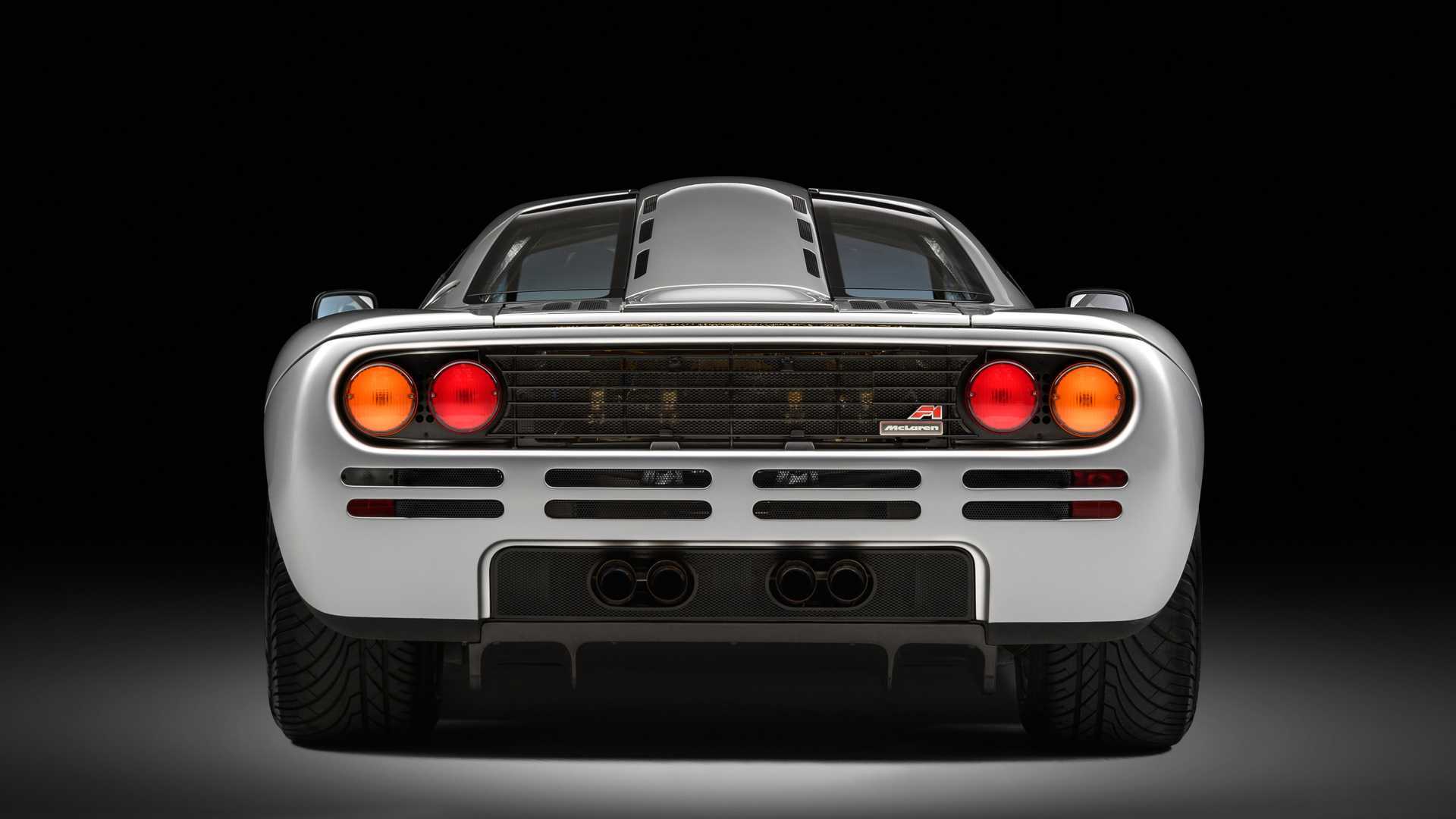
McLaren Special Operations (MSO) is set to premiere its recently restored McLaren F1 #063 at the Hampton Court Concours d’Elegance on September 6-8.

Following on from the announcement of the McLaren F1 Certification programme at last year’s prestigious event, MSO returns with its newest project. As custodians of the F1 legacy, MSO continues to develop and manufacture parts to ensure that every F1 remains an icon of the road for many years to come.

Chassis 63 has undergone a painstaking restoration over a period of 18-months. Initially the body and drivetrain were stripped from the car. The interior was then re-trimmed in the original Semi Aniline leather, which was a one-off for this car. It is finished in Woking Grey – a colour reportedly inspired by the often slate-coloured English sky above McLaren’s then premises on Albert Drive, close to the current location of MSO - using 10 hand-selected hides to meet MSO’s stringent quality standards.

Woking Grey Alcantara® was used on the dashboard and the perforated passenger seats. The driver’s seat was re-trimmed in Woking Grey leather with a red perforated Alcantara® centre panel. The Woking Grey carpets were all renewed and the over mats were finished with a grey leather piping. Finally, the steering wheel was replaced from MSO’s stock of original parts, with the original retained by the owner for historical reference.

Once the interior was re-trimmed, the exterior body panels were re-fitted to chassis 63, repainted in the original Magnesium Silver paint to a meticulously high standard, a process that took nearly 900 hours to complete.

Whilst the body and interior were being restored, the car’s 6.1-litre normally-aspirated engine was completely rebuilt. Once finished, the engine was dyno tested to ensure that it generates the still-impressive 618 bhp capable of powering the McLaren F1 to 243mph before being re-installed in the car.

F1 #063’s dampers were sent back to Bilstein for refurbishment and the driveshafts and hubs were also sent back to the original supplier for rebuild. The final work was completed to provide the F1 Certification for the car to catalogue its provenance.

The restoration was completed in June following almost 3,000 hours of work including final road and track testing. Once work on chassis 63 was completed it was handed over to the owner at the McLaren Technology Centre.

As with every McLaren F1 in the Certification programme, #063 now has its own unique Certificate of Authenticity – which McLaren Automotive is the only body in the world able to issue – authenticating its provenance, originality, service life, road/race history and condition. Conformity with the original specification and to any McLaren-sanctioned upgrades is confirmed by reference to the factory archives.

The owner of chassis 63 is now in possession of a bespoke illustrated book documenting the history of their car as well as a Genesis Speed Form; a 3D laser-scanned McLaren F1 distilled into a scale model to give the essence of the car, which was originally built at Genesis Business Park in Woking.

In total, 106 McLaren F1s were built between 1993-98, among them 64 standard road cars and 28 GTR race cars, and every one is eligible for the scheme.

“Just 12 months ago we announced the MSO McLaren F1 Heritage programme with the unveiling of F1 25R, resplendent in Gulf Racing Colours. Following an extensive restoration, which was very much a labour of love for our team, it’s an honour to now display chassis 63 at the Hampton Court Concours d’Elegance. With the work the team has carried out, this car will continue to fulfil the original brief for the McLaren F1; to create the world’s finest road car.” Ansar Ali, Managing Director, McLaren Special Operations.

Comments

Popular posts from this blog

Cute girl drifting in rally car unfastened

The 9th Dream Car from the Top 10: GM-X Stiletto

When we think of dream cars, our minds often race to sleek designs, innovative technology, and that unmistakable feeling of pure, unbridled passion. The GM-X Stiletto encapsulates all of these elements and more, making it a worthy contender in our top ten list. Ranked at number nine, this concept car from 1964 remains a beacon of automotive ingenuity and a symbol of a bygone era that continues to inspire. A Journey Back to the Jet Age To fully appreciate the GM-X Stiletto, we must travel back to the 1950s and '60s, a time when America was captivated by the future. The jet-age was in full swing, and cars were designed with a sense of bold optimism. Under the visionary leadership of Harley Earl and Bill Mitchell, General Motors created vehicles that mimicked the sleek lines and advanced technologies of jet aircraft. The GM-X Stiletto, born in 1964, was a product of this era's boundless imagination. The Visionary Design The GM-X Stiletto was first unveiled at the 1964-1965 World’s...

【中継】日産モータースポーツファンイベント

10 Newest Cars and SUVs by South Korean Manufacturers (2025-2026 Lineup ...

Chevrolet Concept Cars: Ten Of Our Favorites

Most celebrations of Chevrolet's centennial surround the automaker's production vehicles. Why not? After all, this is the brand that birthed legends like the Bel Air, Corvette, and Camaro, among others. Those vehicles are certainly worth celebrating, but we can't help but wonder: what about the Chevrolet cars that never saw a production line? We've scoured through the history books (and our memory banks) to pick out ten of our all-time favorites.

Bass And Boobs + Skirt Trick & Can Trick

Aventador S | The design draws inspiration from predators and aeronautics

As much as the Aventador is the car most entitled to represent the Lamborghini brand values, the Aventador S is the expression of the Lamborghini flagship par excellence, embodying the utmost synergy between design and engineering in pure Lamborghini style. The “S” has existed for 50 years The first Lamborghini S model was launched 50 years ago to represent the evolution of already revered icons. In fact, the further development of the Miura into a more improved version dates back to 1968, followed by Islero, Countach and Urraco. When the Aventador reaped this legacy and decided to surpass itself, the Aventador S was born. The design draws inspiration from predators and aeronautics The Aventador S presents pure refinement of the iconic design that remains true to the Lamborghini DNA, enhancing its mix of dynamism, refinement and aggressiveness. The sharp lines and surfaces of the front end evoke images of a shark fin, transmitting the same force and elegance when d...

1985 Audi Sport Quattro: The Group B Homologation Special

In Austria in 1980, just a year after four-wheel drive cars became eligible to compete in the WRC, Audi debuted the first Quattro rally car and forever changed the sport. Over the next half of the decade (and onwards, if you count the Pikes Peak specials), these Audis would be subjected to a period of rapid iterative evolution that led to the short-wheelbase Sport Quattro models that helped define the infamously fast and dangerous era of Group B rallying. The relatively lax nature of the Group B regulations gave rise to a number of downright ferocious cars from Audi’s competitors (most notable being Lancia and Peugeot), and while it was not the most successful nor technologically advanced of these top tier cars by the end of the Group B era, the Sport Quattro is a worthy poster child for the lot of them—being first to the punch has its advantages. The advent of the Group B class provided manufacturers with practically every leeway imaginable given they adhered to a basic s...

The 1000 km range Cupra SUV! Cupra Tindaya REVEAL

Chevrolet Racing Claims 14 Championships in 2013

Labels

Show more