



 ATLANTA, Oct. 28, 2019 — Hyundai Motor Company (HMC) today revealed two new concepts at the North American Commercial Vehicle (NACV) Show. Both concepts add product detail to its Fuel Cell Electric Vehicle (FCEV) 2030 Vision for wide-spread deployment of hydrogen-powered fuel cell technology. HMC introduced the HDC-6 NEPTUNE Concept Class 8 heavy duty truck, while Hyundai Translead (HT), a leading trailer manufacturer, announced the launch of its new, clean energy refrigerated concept trailer, the HT Nitro ThermoTech®. The tractor-trailer combination provides a window into the future of the transportation in the U.S. and around the world.
Hyundai is a global leader in fuel cell technology. In 2013, Hyundai launched the first mass-produced and commercially available fuel cell electric vehicle. In 2018, Hyundai launched the dedicated FCEV, NEXO. In December 2018, Hyundai invested USD 6.4 billion to accelerate the development of a hydrogen society, looking beyond passenger vehicles.
“Today at this show, by showing HDC-6 Neptune, the first hydrogen-only concept for Hyundai Motor Company’s commercial vehicles, we will start exploring opportunities in the United States commercial vehicle market,” said Edward Lee, Head of Hyundai Commercial Vehicle Business Division. “Furthermore, we are willing to work with other partners to pave the way to establish a hydrogen ecosystem for CV.”
Hyundai has the necessary processes and experience to develop the quality vehicles that support its FCEV 2030 vision for a hydrogen ecosystem. For commercial vehicles, fuel cells are the perfect fit for heavy duty trucks and long driving distances due to higher drive range, higher payload, less refueling time and ultimately lower costs.
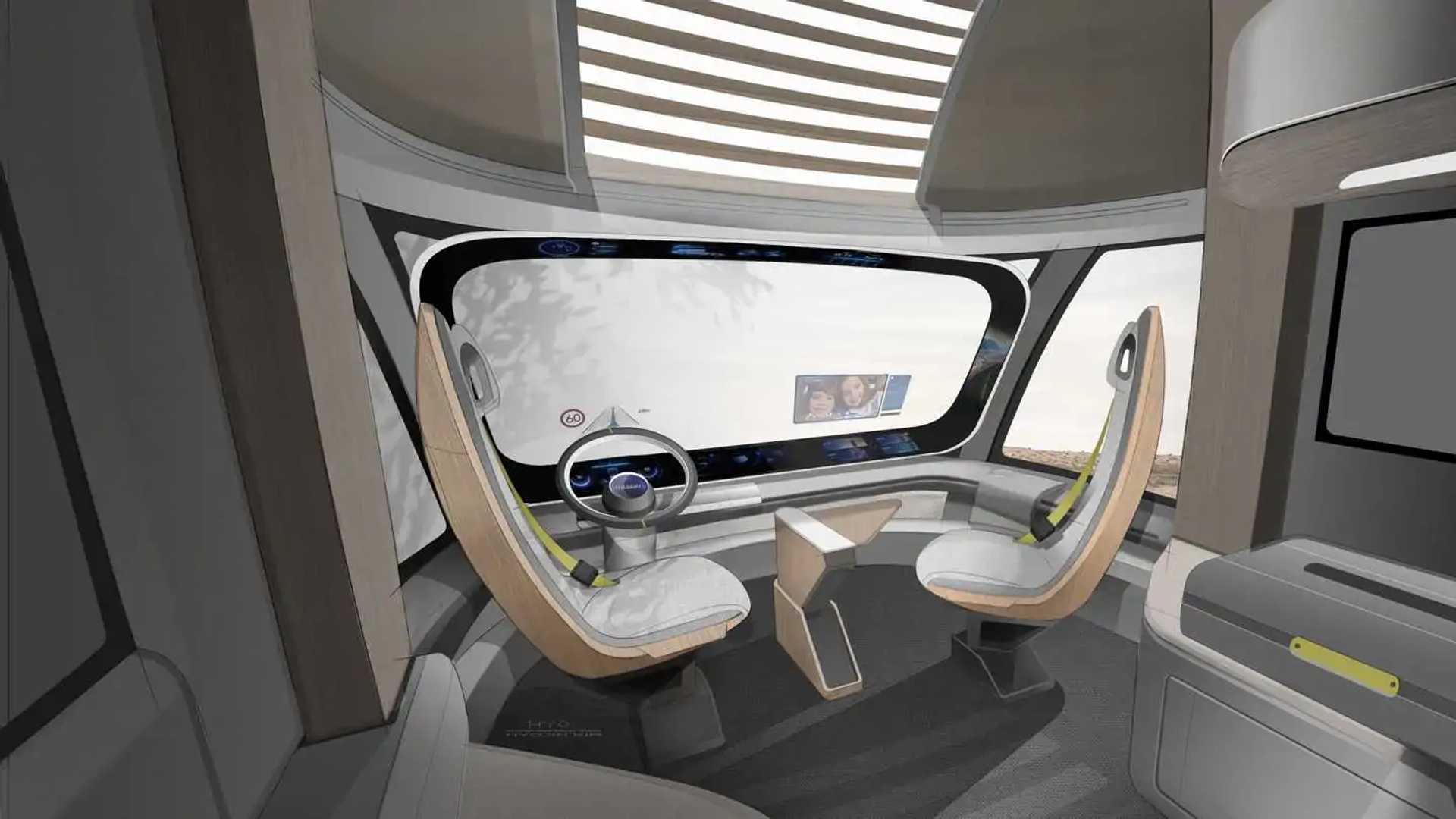
The HDC-6 NEPTUNE evolves the Class 8 truck, looking toward the future in design, in-cab technology and propulsion system. The concept continues Hyundai’s leadership in moving to a decarbonized society and the advancement of zero-emission vehicles. This future truck will add to the company’s success in commercial vehicles, which are already sold in 130 countries around the world.
Hyundai also chose the 2019 North American Commercial Vehicle Show to debut the HDC-6 NEPTUNE Concept to introduce Hyundai commercial vehicles to the U.S. market. While Hyundai’s commercial offerings are well-known elsewhere, this is the first time they have been shown in the U.S. Moving forward, Hyundai will start exploring opportunities in the United States commercial vehicle market, as well as being open to working with other partners to pave the way to establish a hydrogen ecosystem for CV.
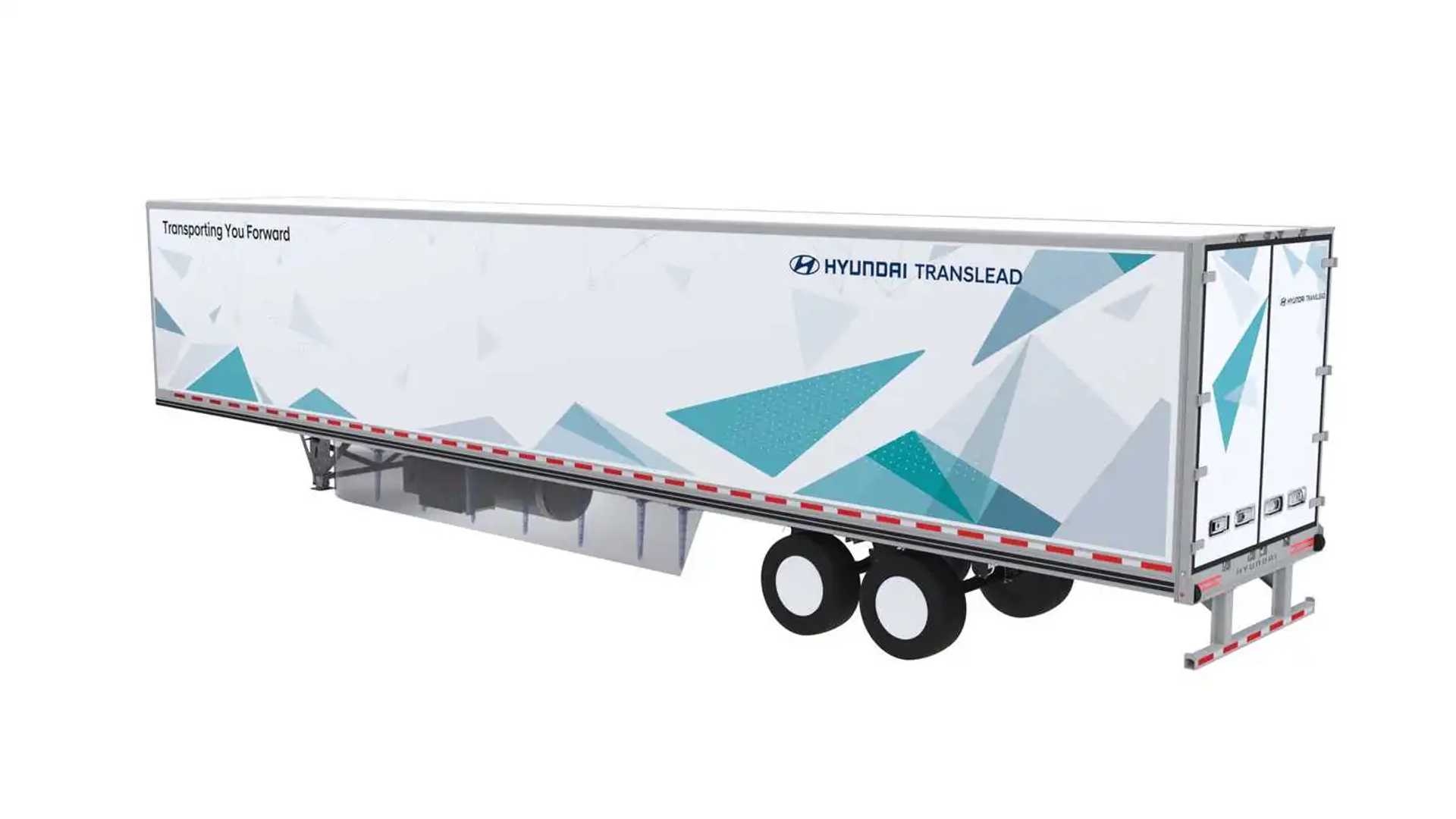
Adding to Hyundai’s sustainable mobility vision, the HT Nitro ThermoTech will be one of the first trailer manufacturers in North America to introduce a refrigerated trailer using a cryogenic nitrogen refrigeration technology system. The concept trailer, developed in collaboration with Air Liquide, is changing the way Hyundai Translead provides refrigerated transportation. The HT Nitro ThermoTech concept trailer’s carbon footprint is up to 90% less than a traditional unit.
Hyundai Motor Company’s 12,000+ sq. ft. display at the NACV Show features numerous exhibitions that represent Hyundai’s FCEV Vision 2030. In addition to the featured HDC-6 NEPTUNE Concept and Nitro ThermoTech trailer, which each have dedicated display areas, visitors can participate in a virtual reality experience to view the HDC-6 interior and view a mock-up fuel cell stack.
HDC-6 NEPTUNE Concept
One of the key design inspirations for the HDC-6 NEPTUNE Concept was the streamliner railway trains that ran from 1936 until 1959, a prime example of Art Deco industrial design. The pioneering twentieth century industrial designer, Henry Dreyfuss, applied a prime example of Art Deco design for the New York Central Railroad in the 1930's, symbolizing the greatest technological wonder of the era, while looking bold and iconic at the same time.
HDC-6 NEPTUNE employs this inspired function driven design, with new ways to combine both form and function to create an entirely unique new solution within the commercial vehicle industry, while offering a holistic global approach.
“The fuel cell powertrain gave us the opportunity to redefine the classical typology and architecture of the truck,” said Luc Donckerwolke, Chief Design Officer of Hyundai Motor Group. “The Hyundai Commercial Vehicles Design Team started with a white sheet of paper focusing on the new defined functionality resetting all standards in order to project commercial vehicles in the future.”
On HDC-6 NEPTUNE, the design team took packaging challenges and found new ways to combine both form and function. Due to increased cooling requirements, the grill of the concept commercial vehicle is applied as the theme across the entire lower portion of the Hyundai HDC-6 NEPTUNE. This creates a distinctive image while maximizing airflow. The grill concept also integrates the retractable steps, which are cleverly hidden. The combination of both cab over engine and conventional (bonnet) truck formats achieves packaging efficiency and improved ergonomics.
“HDC-6 NEPTUNE, the concept for the next-generation fuel-cell electric truck, embodies Hyundai Motor’s vision of mobility for a global hydrogen society, innovatively developed applying Hyundai designers’ creativity and the company’s advanced technology,” said SangYup Lee, Head of Hyundai Design Center. “To maximize the potential of a next-generation fuel-cell electric vehicle, HDC-6 NEPTUNE delivers groundbreaking futuristic architecture. In particular, one can understand Hyundai’s novel approach to the interior design of the space and in capturing lifestyle-oriented mobility.”
Hyundai has already expanded its global leadership in fuel cell technology. Through its joint venture with H2 Energy, Hyundai is commercializing fuel cell electric trucks by providing 1,600 FCEV heavy-duty trucks to the Swiss commercial vehicle market, beginning 2019 through to 2023. With Hyundai’s commercial vehicle entry to the European market, the U.S. market is an important next phase of the company’s FCEV 2020 vision.
HT Nitro ThermoTech® Concept
The HT Nitro ThermoTech concept trailer provides a response to the rising challenges of clean transportation: reducing greenhouse gases and dependence on fossil fuels while maintaining competitiveness.
The HT Nitro ThermoTech concept trailer is optimal for transporting cold chain products. Temperatures are reduced more quickly than a traditional refrigeration unit and maintained with precise control of desired temperatures. The intelligent control system and independent cooling power maximize thermal efficiency. The HT Nitro ThermoTech concept trailer is not affected by outside temperatures. Maximum power is always available, even when the truck’s engine is off or idling.
The HT Nitro ThermoTech concept trailer cooling unit is virtually noiseless which significantly reduces noise pollution for drivers as well as at the point of deliveries. This is a significant advantage for night-time deliveries in urban and suburban neighborhoods where noise can be distracting.
“This refrigerated trailer concept represents a significant advancement in our continued commitment to corporate social responsibility,” said Bongjae Lee, Chief Executive Officer of Hyundai Translead. “By developing innovative technology, Hyundai Translead is helping address climate change. The HT Nitro ThermoTech reduces pollutants and emissions while providing reliable and effective cold chain food transportation.”
Moreover, the HT Nitro ThermoTech concept trailer features new, enhanced structural designs. The side wall, front wall, and roof are each constructed as a one-piece, structural sandwich foam panel with Fiber Reinforced Polymer (FRP) skins. The materials are made without posts and roof bows. The one-piece structural foam panel design creates a lighter weight trailer with increased wall strength and enhanced thermal efficiency, while maintaining the same cubic trailer volume. The improved structure panels are bonded to the rails, which reduce thermal bridges, remove potential water intrusion, and provide a cleaner finish.
Hyundai Motor Company will conduct a press conference during the NACV Show on Tuesday, October 29 at 11:30 a.m. EDT.
Comments
Post a Comment