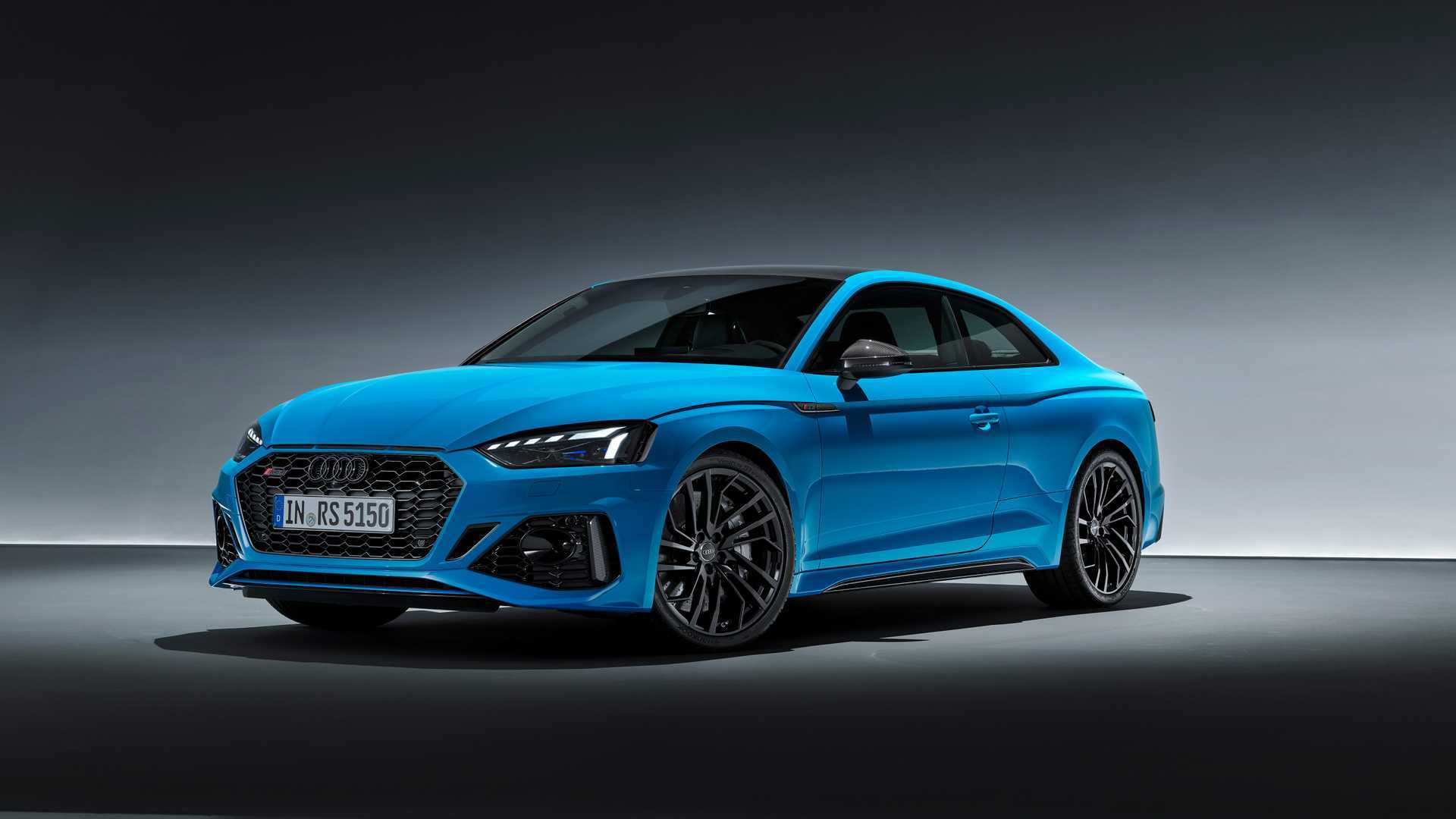


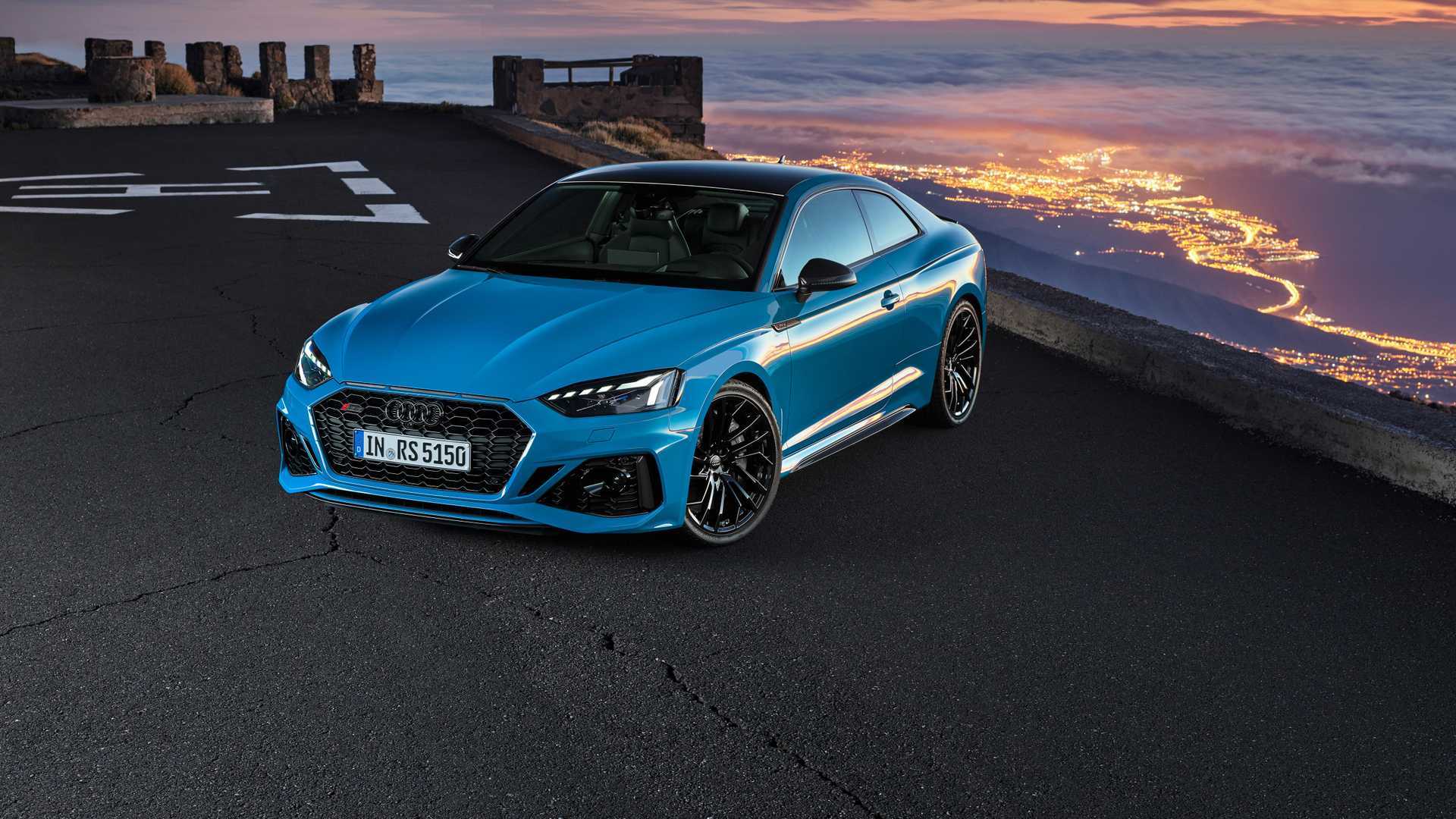


 Audi has revised the RS 5 Coupé (combined fuel consumption in l/100 km: 9.1 (25.8 US mpg); combined CO2 emissions in g/km: 208 (334.7 g/mi) and the RS 5 Sportback (combined fuel consumption in l/100 km: 9.2 (25.6 US mpg); combined CO2 emissions in g/km: 209 (336.4 g/mi). New details make the exterior design even more progressive. For operation, both models rely on the new MMI touch technology with a large central screen. The twin-turbo V6 with an output of 331 kW (450 PS) and 600 Nm (442.5 lb-ft) of torque (combined fuel consumption in l/100 km: 9.2–9.1 (25.6–25.8 US mpg); combined CO2 emissions in g/km: 209–208 (336.4–334.7 g/mi)) continues to ensure an impressive driving performance. In Germany and other European countries, the sale of the revised RS 5 starts shortly; prices start at EUR 83,500.
*The collective consumption values of all models named and available on the German market can be found in the list provided at the end of this MediaInfo.
“The revision of the RS 5 Coupé and RS 5 Sportback marks the successful conclusion of our 25th anniversary and the renewal of our model range,” says Oliver Hoffmann, Managing Director of Audi Sport GmbH. “Thanks to the standard permanent quattro drive, they occupy a special position in their segment.”
Streamlined: the exterior design
The refined exterior design of the two RS 5 models* is recognizable at first glance. The Singleframe has become wider and flatter. With this clean look, it follows the design of its big brothers, the RS 6* and RS 7*. Implied air vents above the grille are reminiscent of the classic Audi Sport quattro from 1984. The wheel arches, which are 40 millimeters (1.6 in)wider, give the RS 5* an impressive appearance. The optional matrix LED headlights with Audi laser light feature darkened bezels, which clearly set the two RS models apart from the basic A5 model. The large, strongly contoured air inlets have been given a new, pentagonal cut.
The side sills and the diffuser insert at the rear end, which encloses the two large tailpipes of the exhaust system, have also been redesigned. The gloss black, matt aluminum, and carbon styling packages give the attachments at the front and rear ends and the side sills an even more individual look. The four rings and RS logos can be designed in black upon request. The colors Turbo blue and Tango red have been added to the color palette. The Coupé is fitted with a carbon roof with a CFRP fiber structure which lowers the vehicle’s weight by just under four kilograms (8.8 lb).
Cool look: the interior
Horizontal lines and dark colors dominate the interior of the revised RS 5 models*. The RS sport seats are covered with Alcantara and leather as standard, or fine Nappa leather as an option. The RS design package with red or gray accents is available upon request. Control elements such as the steering wheel and selector lever as well as the knee pads are fitted with Alcantara covers with red or gray contrasting stitching.
Touch instead of turn: the new operating concept
The new operating concept of the two RS 5 models* is concentrated on a 10.1-inch MMI touch display. The large, free-standing display with acoustic feedback is slightly inclined toward the driver. If the top infotainment system MMI navigation plus is on board, a specific RS monitor provides the driver with information on the drive temperature, longitudinal and lateral acceleration, the quattro sport differential, the tire pressure and the tire temperature.
In the optional Audi virtual cockpit plus (12.3-inch display), the driver can select between multiple screens – one of them is the RS-specific performance design, which displays the rotational speed scale as a kind of angle that includes a shift light display. When the driver uses the RS mode steering wheel button to select one of the two new individual RS modes, the RS-specific performance design opens up and displays the maximum g-acceleration values, for example. The optional head-up display also offers exclusive RS graphics.
Traction, dynamism, and stability: the drive
Immense tractive power and a high output combined with efficiency: The 2.9 TFSI twin-turbo V6, the heart of the RS 5 models (combined fuel consumption in l/100 km**: 9.2–9.1 (25.6–25.8 US mpg); combined CO2 emissions in g/km**: 209–208 (336.4–334.7 g/mi)), outputs an unchanged 331 kW (450 PS) and already delivers a whopping 600 Nm (442.5 lb-ft) of torque as from a speed of 1,900 rpm. Both RS 5 models* accelerate from zero to 100 km/h (62.1 mph) in 3.9 seconds and reach a top speed of up to 280 km/h (174.0 mph) upon request.
A quick-shifting eight-speed tiptronic directs the power of the engine to the quattro permanent all-wheel drive. The driver can control the gear change via the new larger aluminum shift paddles. The quattro drivetrain provides the two RS models* with the crucial amount of additional traction, dynamism, and stability, regardless of the weather. The handling is made even sportier with the optional sport differential at the rear axle, which distributes the torque actively between the wheels.
High precision: the suspension
The two RS 5 models* are fitted as standard with a taut RS sport suspension. The RS sport suspension plus with the Dynamic Ride Control (DRC) hydraulic roll and pitch stabilization is available as an option. It uses steel springs and three-stage adjustable dampers that are connected to one another via diagonal oil lines and a central valve. When cornering at speed, the valves regulate the oil flow in the damper of the spring-deflected front wheel at the outside of the curve. They reinforce the support and reduce pitching and rolling, thereby improving the vehicle’s handling characteristics.
In addition to the familiar comfort, auto, and dynamic modes, the Audi drive select dynamic handling system (standard) also offers the two new modes, RS1 and RS2. Once the driver has set the two modes to suit their personal preferences and stored them, they can be enabled directly via the “RS MODE” button on the steering wheel without having to operate the MMI touch response again. The system accesses important technical elements like the engine, transmission, damping, steering, dynamic steering, sport differential, and engine sound.
The revised RS 5 models* are equipped with 19-inch wheels. New 20-inch wheels are available upon request in three variants, one of which is painted completely in gloss black and another in matt bronze. In the standard brake system, steel disks are gripped by calipers painted in black or red. As an alternative, Audi offers carbon fiber ceramic brake disks for the front axle; their calipers are painted in gray, red, or blue.
Sporty luxury: the equipment
The top infotainment system MMI navigation plus uses a new main unit, the third-generation modular infotainment platform (MIB 3), for its numerous functions. The portfolio of Audi connect adds numerous online services to the navigation. Some of the more than 30 available driver assist systems are on board as standard. The others are either available as individual options or combined in the Drive and Park packages.
In Germany and other European countries, the sale of the revised RS 5 models* starts shortly. The prices for both cars start at EUR 83,500.
Comments
Post a Comment